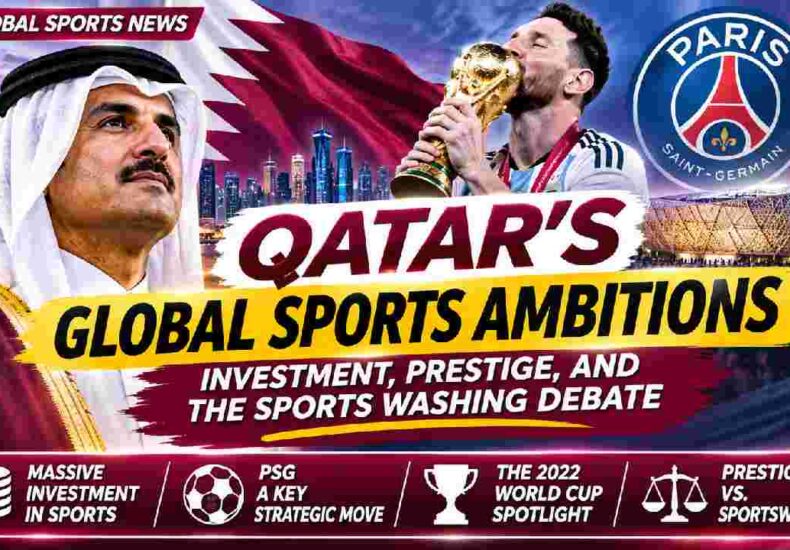
Qatar’s Global Sports Ambitions: Investment, Prestige, and Sportswashing Debate
Fundacion Rapala – Over the past decade, Qatar has transformed itself into a major player in international sports. Despite its relatively small population, the Gulf nation has invested heavily in football, sporting infrastructure, and global competitions. Its ambitions extend far beyond winning trophies or hosting prestigious tournaments. Instead, Qatar sees sports as an opportunity to strengthen international relationships and diversify its economy. The 2022 FIFA World Cup became the clearest symbol of this strategy. Millions of viewers watched matches across modern stadiums, bringing unprecedented attention to the country. Meanwhile, investments in European football clubs helped Qatar establish a presence in global sports culture. However, these achievements have also generated questions about political influence and human rights. As a result, Qatar global sports investment has become a subject of international debate. Supporters highlight economic development and diplomatic opportunities, while critics question the motivations behind such enormous spending.
Paris Saint-Germain Became Qatar’s Gateway to European Football
Qatar’s expansion into European football reached a turning point in 2011. That year, Qatar Sports Investments acquired a controlling stake in Paris Saint-Germain. The French club already possessed a strong domestic identity, but Qatari ownership accelerated its international ambitions. Significant financial investment helped PSG recruit internationally recognized players and expand its commercial operations. Zlatan Ibrahimović, Neymar, Kylian Mbappé, and Lionel Messi became prominent figures during this era. Their presence attracted global audiences and strengthened the club’s commercial appeal. Meanwhile, PSG developed into one of football’s most recognizable brands. For Qatar, the benefits extended beyond match results. Every major transfer, international fixture, and commercial partnership increased visibility for its broader sporting strategy. However, the scale of investment also raised questions about financial competition in European football. The PSG project illustrates how club ownership can become both a business opportunity and an instrument of international influence.
Read More : Jack Campbell Hospitalized After Scary Neck Injury Against Vikings
The 2022 FIFA World Cup Elevated Qatar’s International Profile
Hosting the 2022 FIFA World Cup represented a defining moment in Qatar’s sporting ambitions. The tournament brought international teams, supporters, journalists, and government representatives to the Gulf nation. Qatar invested in stadiums, transportation networks, and supporting infrastructure to prepare for the event. The final between Argentina and France delivered one of the competition’s most memorable matches. Lionel Messi’s victory also created images that reached audiences around the world. Beyond football, Qatar used the tournament to demonstrate its capacity to organize a major international event. However, the preparations attracted scrutiny over migrant workers’ rights and working conditions. Human rights organizations questioned whether reforms provided sufficient protection for vulnerable workers. Qatari authorities emphasized improvements to labor regulations and employment standards. Consequently, the tournament became both a sporting achievement and a focus of international debate. Its legacy continues to influence discussions about the responsibilities of future World Cup hosts.
Sports Investment Strengthens Qatar’s Economic Diversification Strategy
Sports also play an important role in Qatar’s plans to reduce dependence on hydrocarbon revenues. The country has sought to expand tourism, hospitality, entertainment, and other service industries. International sporting events can support these ambitions by attracting visitors and creating opportunities for local businesses. Hotels, transportation providers, restaurants, and event organizers may benefit from increased activity surrounding major competitions. Meanwhile, sports facilities can provide venues for future tournaments and community activities. However, infrastructure investments do not automatically guarantee long-term economic returns. Their success depends on operating costs, continued demand, and effective planning after events conclude. Qatar therefore faces the challenge of converting international attention into sustainable economic activity. This makes Qatar global sports investment more than a collection of sponsorship agreements or stadium projects. It represents a broader effort to connect international visibility with domestic development, while balancing ambitious spending against measurable economic benefits.
Read More : Aerin Frankel Looks Beyond Olympic Gold After Remarkable 2026
Sports Diplomacy Helps Qatar Build Relationships Beyond the Gulf
International sports provide Qatar with opportunities to strengthen relationships across different regions. Football clubs, tournament organizers, sponsors, and broadcasters create networks that extend beyond traditional diplomatic channels. Through these connections, Qatar can engage with influential institutions and international audiences. Hosting major competitions also brings political leaders and business representatives into direct contact with the country. Such interactions can support dialogue and improve visibility on the global stage. However, sporting influence does not replace conventional diplomacy or resolve political disagreements automatically. Instead, it offers an additional platform for communication and cooperation. Qatar’s involvement in international football demonstrates how modern states increasingly use cultural and sporting activities to develop soft power. This approach relies on recognition, relationships, and public perception rather than military strength alone. Nevertheless, the effectiveness of sports diplomacy depends on whether international audiences view these activities as credible and beneficial.
Sportswashing Allegations Raise Questions About Human Rights
Qatar’s growing influence in international sports has also attracted criticism from human rights organizations and political observers. Critics argue that major sporting investments can improve a country’s international image while drawing attention away from controversial domestic policies. This practice is commonly described as sportswashing. Concerns surrounding Qatar have included migrant labor conditions, freedom of expression, and legal protections for certain groups. However, Qatari officials have defended the country’s sporting strategy and highlighted reforms introduced in recent years. They argue that international events encourage development, cultural exchange, and economic opportunities. The debate therefore involves competing interpretations of Qatar’s motivations and achievements. Importantly, investment in sports does not by itself establish that image management is the sole objective. Evaluating the issue requires examining both measurable reforms and continuing concerns. Transparency and independent scrutiny remain essential when assessing the broader consequences of Qatar’s international sporting ambitions.
Qatar’s Sporting Future Depends on Legacy and Global Trust
Qatar’s position in international sports continues to evolve as the country builds on its previous investments. The challenge now involves maintaining global relevance while demonstrating lasting benefits from major sporting projects. Stadiums, transportation systems, and commercial partnerships can support economic activity beyond individual tournaments. However, their long-term value depends on effective management and consistent demand. At the same time, international expectations surrounding human rights and institutional transparency remain significant. Qatar must therefore navigate a complicated relationship between sporting prestige, economic ambition, and public accountability. For international audiences, the country’s achievements cannot be separated entirely from questions about how those achievements were delivered. Meanwhile, sports organizations face their own responsibility to establish credible standards for hosting and investment. Ultimately, Qatar global sports investment illustrates how modern sports have become closely connected to diplomacy, business, and national reputation. Its future influence will depend on more than sporting success alone.