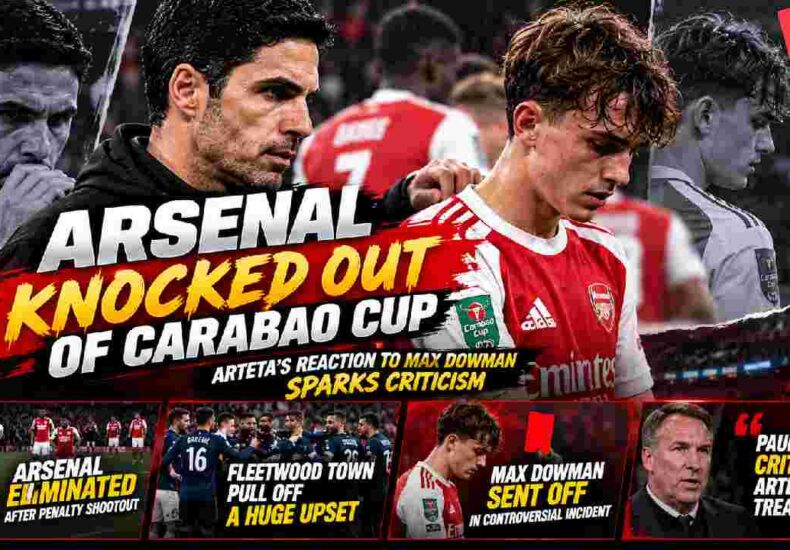
Arsenal Crash Out of Carabao Cup as Arteta Faces Criticism Over Max Dowman Treatment
Fundacion Rapala – The Arsenal Carabao Cup exit delivered one of the biggest surprises of the competition as Fleetwood Town ended the Gunners’ campaign. The fourth-tier side held Arsenal to a 1-1 draw through extra time before winning the penalty shootout 5-3. For Arsenal, the result was difficult to accept because they entered the match as overwhelming favorites. However, the night became about more than the score. Sixteen-year-old Max Dowman received a red card late in normal time following an incident involving Fleetwood defender Harrison Neal. That dismissal changed the atmosphere around an already tense contest. Arsenal continued pushing despite playing with 10 men and still created opportunities to score. Yet Fleetwood survived and eventually completed a memorable upset from the penalty spot. For the visitors, it became a historic evening. For Arsenal, meanwhile, defeat quickly raised uncomfortable questions about performance, discipline, and the treatment of a teenage player.
Max Dowman’s Red Card Changes the Story of the Match
Dowman’s dismissal became the defining moment before the penalty drama. The 16-year-old was sent off after officials judged his confrontation with Neal to involve violent conduct. However, the decision immediately created debate. Senior commentator Andy Hinchcliffe believed the punishment was too severe, while Arteta admitted afterward that he had not yet watched the incident from another camera angle. Therefore, the Arsenal manager avoided making a detailed judgment about the referee’s call. What could not be ignored was the difficult situation facing Dowman. A young player trying to establish himself suddenly had to walk off during a major cup upset. Arsenal then faced the closing stages with only 10 players. Even so, Arteta said his team produced three significant opportunities to score a second goal. Those chances went unfinished. Fleetwood remained alive, and the match eventually reached penalties, where the lower-league side turned Arsenal’s frustrating evening into a painful elimination.
Read More : Kenneth Walker Sparks Attention After Skipping Seahawks Handshakes
Arteta’s Reaction to Dowman Draws Attention
The most emotional debate began as Dowman left the pitch. Television cameras showed Arteta approaching the teenager and speaking to him before he disappeared down the tunnel. The brief interaction soon attracted attention because viewers interpreted the manager’s body language in different ways. When reporters later asked what he had said, Arteta explained that it concerned something the pair had discussed before the game. He did not reveal further details. That limited explanation left room for debate about how a manager should respond when a young player makes a costly mistake. Dowman is only 16 and remains at an early stage of his professional development. At the same time, elite football demands discipline regardless of age. Arteta therefore faced a delicate balance between accountability and emotional support. The moment might have passed quickly on the touchline, but Arsenal’s defeat ensured that every gesture received greater scrutiny afterward.
Paul Merson Believes the Teenager Needed Support
Former Arsenal midfielder Paul Merson strongly criticized Arteta’s apparent response to Dowman. His concern centered less on the red card itself and more on how an experienced manager should treat a 16-year-old after such a difficult moment. Merson argued that Arteta might have reacted differently if the player involved had been an established senior international such as Viktor Gyokeres. Instead of confronting Dowman as he walked away, Merson said he would have embraced the youngster. His argument highlighted the emotional vulnerability that can accompany a young player’s introduction to elite football. A red card can become a painful learning experience, especially when it contributes to a cup elimination. However, Merson also noted that Dowman was hardly the first Arsenal player to receive one. His criticism therefore raised a wider question: should young players face immediate accountability, or should emotional reassurance come first when the pressure is at its highest?
Read More : Laker Girl Tevai Still Gets Starstruck Entering Her Fourth Season
Arsenal Still Had Chances Despite Playing With 10 Men
Although Dowman’s red card became the dominant talking point, Arteta emphasized that Arsenal still had opportunities to win the match. According to the manager, his side created three major chances for a second goal even after being reduced to 10 players. That detail adds another layer to the defeat. Arsenal cannot place the entire responsibility on a teenager when the team still had opportunities to finish the contest. Against a club from the fourth tier, the Gunners were expected to control the game regardless of difficult circumstances. Instead, Fleetwood stayed competitive until the final kick. Their resilience ultimately carried them through extra time and into the shootout. Penalties then provided the decisive moment, with Fleetwood winning 5-3. For Arsenal, the result exposed the unforgiving nature of knockout football. One incident can transform a match, yet missed chances also matter. The red card shaped the story, but it was not the only reason Arsenal went home.
Dowman’s Difficult Night Could Become a Valuable Lesson
For Dowman, one painful evening does not need to define his young career. At 16, he is still learning how quickly emotions can change inside a competitive match. The controversy surrounding his dismissal may even become an important lesson as he develops. Young footballers need opportunities, but they also need space to make mistakes and understand their consequences. That is where coaching becomes particularly important. Arteta and Arsenal must help Dowman process the incident without allowing it to damage the confidence that helped him reach senior football at such a young age. Merson’s criticism reflects one philosophy of player management, while Arteta may have viewed immediate accountability differently. Neither changes the reality that Dowman now faces an important response. His next appearances will reveal more about his character than one red card. For a teenager surrounded by intense public attention, learning how to recover may prove as important as learning how to play.
Arteta Faces Questions Beyond Arsenal’s Cup Elimination
Arsenal’s defeat will remain an embarrassing result regardless of the debate surrounding Dowman. Losing a penalty shootout to Fleetwood after a 1-1 draw removes another possible trophy from the season. Yet the aftermath has shifted attention toward Arteta’s management of young talent. Every elite manager must demand standards, but those demands become more complicated when the player involved is only 16. Merson clearly believes compassion should have been the first response. Arteta, meanwhile, suggested that his words related to a conversation held before kickoff. Without knowing the full exchange, any judgment about the interaction requires caution. What is clear is that the incident created a powerful image on a painful night for Arsenal. Fleetwood earned the right to celebrate a remarkable upset. Arsenal must now move forward, while Dowman and Arteta will have to ensure one difficult moment becomes a lesson rather than a lasting scar.