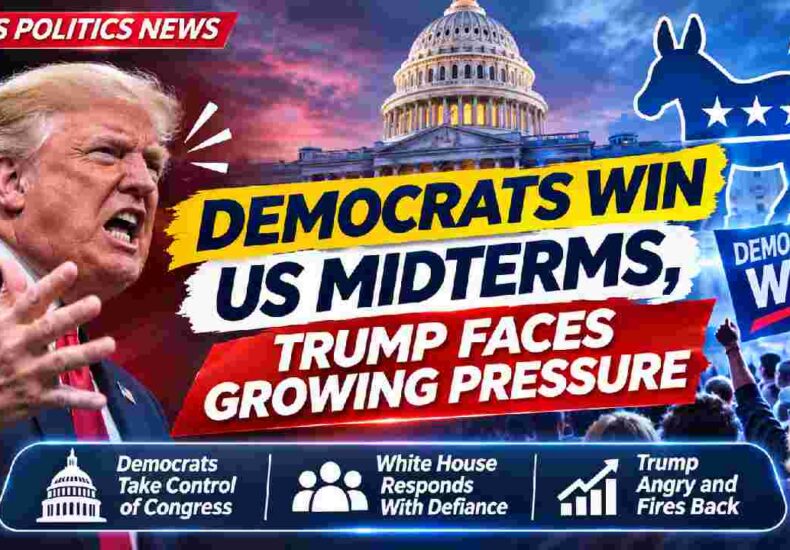
Democrats Win US Midterms as Trump Faces Growing Political Pressure
Fundacion Rapala – The 2026 US midterm elections delivered a major political setback for President Donald Trump and the Republican Party. On November 3, American voters gave Democrats control of both chambers of Congress. The results marked a major shift in Washington’s political balance. Democrats won important races across several states, including areas that traditionally supported Republicans. Meanwhile, the White House faced growing pressure as election results revealed the scale of the losses. Trump had spent weeks campaigning for Republican candidates and encouraging supporters to vote. However, those efforts failed to prevent a Democratic victory. The outcome also reflected public frustration over rising living costs and national political tensions. For many Americans, the election offered an opportunity to express concerns about the country’s direction. As a result, Washington now faces a new political chapter, with Democrats gaining greater power to challenge the president’s agenda.
White House Responds With Defiance After Republican Losses
The atmosphere inside the White House reportedly changed as Democratic victories became clear. Earlier, officials had expressed cautious confidence about Republican chances. However, the election results created a more difficult political situation for the administration. According to reporting cited by AFP, a White House official described the response as defiant. The official also questioned the quality of several Republican candidates. In that view, Trump had worked harder to promote some candidates than they had worked for themselves. Such criticism suggested growing frustration within Republican circles. Nevertheless, the president’s support remained a major part of the party’s campaign strategy. Trump had appeared at rallies and endorsed candidates across the country. Despite those efforts, Democrats captured important seats. The 2026 US midterm elections therefore raised difficult questions about Republican campaign decisions. Party leaders now face pressure to understand why many voters chose a different direction.
Read More : Helicopters Collide Near Everest, Leaving One Foreign Tourist Dead
Trump Criticizes Fox News as Election Pressure Builds
President Trump also expressed frustration through social media as the election results developed. His criticism included Fox News, a television network with a large conservative audience. The reaction drew attention because the network has long played an important role in Republican political discussions. However, Trump’s criticism reflected wider tensions surrounding the election. The president had made himself a central figure in Republican campaigns, even though his name was not on the ballot. As Democrats gained ground, questions emerged about whether his support had helped or hurt individual candidates. Trump also signaled that he would use presidential powers to challenge policies he opposed. Yet his public response was not limited to confrontation. Separate reporting indicated that he was prepared to accept the results and work with Democrats. These mixed signals highlighted the difficult political environment following the Republican defeat. <Cite refs={[“turn400739news22″,”turn400739search16”]}/>
Republican Candidates Struggle Despite Trump’s Campaign Support
Republican candidates entered the election with strong support from the president and party organizations. Trump traveled across the country to promote candidates and encourage turnout. However, several important races ended differently from Republican expectations. Democrats achieved notable victories in states where conservative candidates had enjoyed strong advantages. Texas and South Carolina became especially striking examples of this political shift. The results showed that presidential endorsements could not guarantee success at the ballot box. Local concerns, candidate appeal, and national conditions also influenced voter decisions. Meanwhile, Republicans faced questions about their campaign messages and ability to reach undecided voters. The White House criticism of candidate quality added another layer to the debate. Although Trump remained influential within his party, the losses showed the limits of that influence. Republican leaders must now examine how their campaigns connected with voters beyond the party’s most loyal supporters.
Read More : Italy Rocked by Nationwide Strike as Cost-of-Living Anger Grows
Rising Living Costs Shape Voter Concerns Across America
Economic pressure played an important role in the 2026 US midterm elections. Many voters expressed concern about high prices and the cost of everyday necessities. For families managing household budgets, political promises often matter less than their daily financial reality. Groceries, housing, and other essential expenses can influence how people judge government performance. Meanwhile, the war involving Iran and concerns about political accountability added to public frustration. These issues created a difficult environment for Republican candidates defending the administration’s record. Democrats used the election to challenge the direction of national policy and demand stronger oversight. However, their victory does not mean every voter shares the same political priorities. Americans remain divided on many major questions. Still, the results showed that economic concerns can influence elections across traditional party boundaries. For Washington, addressing those concerns will remain a major challenge after the campaign ends.
Democratic Control of Congress Creates New Challenges for Trump
Democratic control of both the House and Senate will change how Washington operates. The party can now exercise greater influence over legislation, government oversight, and important political decisions. Congressional committees may also investigate actions taken by the Trump administration. Meanwhile, the Senate can play a stronger role in reviewing presidential appointments. These powers could create more difficult negotiations during the remaining years of Trump’s presidency. However, Democrats will still face limits when trying to advance their own proposals. The president can veto legislation, while disagreements between lawmakers may slow major reforms. As a result, both parties will need to decide when cooperation serves their interests. Political confrontation could increase, especially over spending, foreign policy, and government accountability. Yet voters may also expect practical solutions rather than endless arguments. The new balance of power makes those expectations increasingly important for both parties.
America’s Political Future Enters a New and Uncertain Chapter
The 2026 US midterm elections have changed the political landscape halfway through Trump’s second presidential term. Democrats now hold congressional power that can reshape debates over national policy. Meanwhile, Republicans must rebuild confidence after losing several important races. The election also demonstrated that voters can challenge established political patterns when their concerns grow stronger. For ordinary Americans, however, the consequences will extend beyond campaign speeches and party celebrations. Decisions made in Congress can affect household finances, public services, and the country’s international relationships. Therefore, the coming months will test how both parties respond to their new responsibilities. Democrats must show how they intend to use their congressional majorities. At the same time, Trump must decide how to work with an opposition-controlled Congress. The election has ended, but the struggle over America’s political direction is entering another important stage.