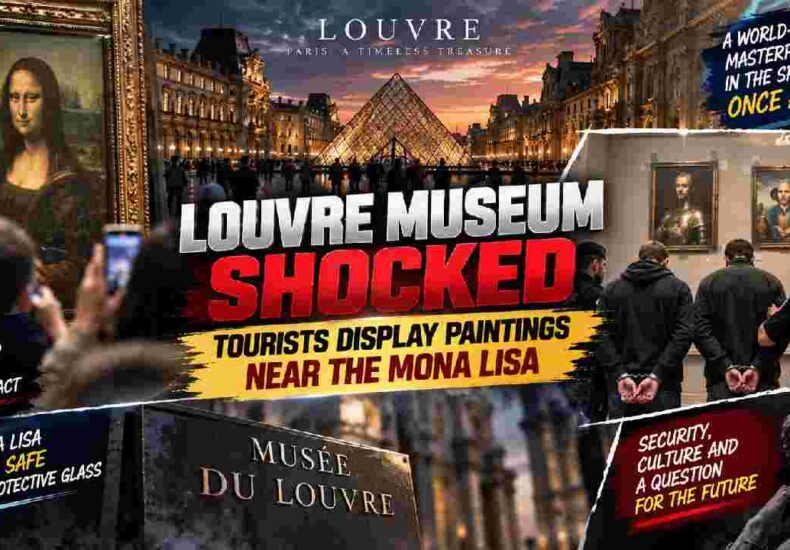
Louvre Museum Shocked as Tourists Display Paintings Near Mona Lisa
Fundacion Rapala – The Louvre Museum faced an unusual incident after two German tourists allegedly placed their own paintings on a wall inside the gallery where visitors view Leonardo da Vinci’s Mona Lisa. According to the information provided, the two men used tape to display two artworks measuring around 30 by 40 centimeters. One painting reportedly showed one of the men wearing armor, while the other depicted both men alongside a woman. Security officers quickly intervened and contacted police after noticing the unauthorized display. The Mona Lisa itself remained protected behind thick glass and was not damaged. However, the gallery wall reportedly suffered minor damage during the incident. The episode quickly attracted attention because the room remains one of the Louvre’s busiest spaces. For visitors, the moment transformed an ordinary museum visit into an unexpected scene involving security, art, and public curiosity.
Security Officers Quickly Respond to the Unusual Act
The response from Louvre security showed how quickly an unauthorized action can draw attention inside a major cultural institution. After the two visitors attached their paintings to the wall, security personnel reportedly detained them before contacting French police. Authorities later questioned the pair over allegations involving minor damage to the museum property. The men reportedly told investigators that they carried out the stunt simply for amusement, according to the source cited in the original report. The Louvre subsequently filed a formal complaint concerning the damage. Although the paintings were removed, the incident raised broader questions about how museums manage unexpected behavior in crowded exhibition spaces. Security teams must protect artworks while also maintaining a comfortable experience for millions of visitors. Therefore, even an action that appears playful can create operational problems when it happens close to a globally recognized masterpiece such as the Mona Lisa.
Read More : Lithuania Moves to Lift Nuclear Weapons Ban Amid Russia Tensions
The Mona Lisa Remained Safe Behind Protective Glass
Despite the commotion inside the gallery, the Mona Lisa itself was not damaged during the incident. Leonardo da Vinci’s famous painting remains displayed behind a protective glass barrier, which provides an important layer of separation between the artwork and visitors. That protection proved significant because the unauthorized paintings were placed on the surrounding wall rather than directly on the masterpiece. Still, the episode highlights the delicate balance between public access and preservation. The Mona Lisa attracts visitors from around the world, many of whom wait in crowded conditions for a chance to see the painting in person. Consequently, security measures must account for both accidental contact and deliberate actions. Museums cannot completely eliminate unpredictable behavior, but they can reduce potential risks through surveillance, staff presence, controlled visitor movement, and physical barriers. The Louvre incident therefore offers another reminder of the challenges involved in protecting priceless cultural heritage.
Visitor Numbers Put Pressure on the Louvre
The incident also comes at a time when the Louvre faces significant pressure from enormous visitor numbers. The museum welcomed millions of people last year, making crowd management an important part of its daily operations. The Mona Lisa room is particularly challenging because the painting remains one of the most recognizable artworks in the world. Visitors from different countries regularly gather there to take photographs and experience the masterpiece firsthand. As crowds increase, museum staff must manage movement while protecting artworks and maintaining safety. Furthermore, older buildings can create additional challenges because their original layouts were not necessarily designed for modern tourism on such a large scale. The Louvre has previously faced concerns about aging infrastructure and outdated security systems. Therefore, the latest incident has become part of a larger discussion about how one of the world’s most famous museums can balance accessibility, preservation, security, and visitor comfort.
Read More : Presley Gerber’s Life Story, From Modeling Success to Personal Struggles
Louvre Faces Questions About Modern Security
The latest incident follows wider concerns about security at the Louvre. Previous reports have highlighted weaknesses involving surveillance equipment and other protective systems. An audit commissioned by the museum had reportedly identified security concerns years earlier. Such findings have gained renewed attention following several incidents involving cultural institutions in France. However, security challenges at a museum as large and busy as the Louvre extend beyond cameras and alarms. Staff must also monitor thousands of visitors, identify unusual behavior, protect valuable collections, and respond quickly when something unexpected happens. At the same time, excessive restrictions could make museums less welcoming to the public. Finding the right balance therefore requires careful planning and investment. The incident involving the two tourists did not damage the Mona Lisa, but it demonstrates how quickly an unconventional act can become a security matter when it occurs inside a crowded space filled with priceless works.
Plans for a Major Louvre Transformation Continue
The Louvre is also preparing for broader changes that could reshape the visitor experience in the coming years. French President Emmanuel Macron previously announced plans involving a new entrance and a dedicated space for the Mona Lisa. The proposed changes aim to address visitor pressure while creating a more suitable environment for one of the museum’s most famous attractions. Such modernization comes as the historic institution faces challenges from aging infrastructure, heavy tourism, and changing environmental conditions. In addition, the museum experienced operational difficulties during a major heatwave in France, when high temperatures affected working and visiting conditions. These pressures show that the future of the Louvre involves more than protecting individual paintings. The institution must also adapt its buildings and services to changing climate conditions, growing visitor demand, and modern expectations. As a result, future renovations could become an important part of preserving the museum’s role in global culture.
Climate Challenges Add Another Layer of Pressure
The Louvre’s security concerns exist alongside another challenge that museums around the world increasingly face: extreme weather. During a major heatwave in France, the museum reportedly shortened its opening hours because high temperatures made conditions difficult for visitors and employees. The situation highlighted vulnerabilities within an old building that was not originally designed for today’s climate conditions or enormous tourist numbers. Rising temperatures can affect both human comfort and the preservation environment required by artworks. Therefore, climate control, ventilation, energy systems, and building improvements have become increasingly important for cultural institutions. The Louvre’s experience illustrates how historic museums must adapt without losing the architectural character that makes them special. Meanwhile, visitor demand continues to grow around iconic attractions such as the Mona Lisa. Between security incidents, crowded galleries, aging infrastructure, and extreme heat, the museum faces a complex future in which protecting art also means protecting the environment and people surrounding it.