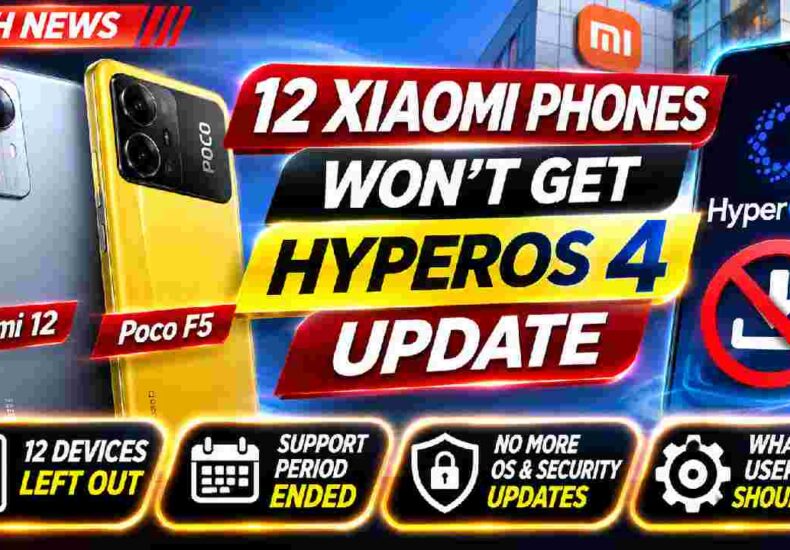
Xiaomi HyperOS 4 Update Leaves 12 Popular Phones Behind, Including Xiaomi 12 and Poco F5
Fundacion Rapala – The arrival of Xiaomi HyperOS 4 marks another important chapter in the company’s evolving smartphone ecosystem. However, the excitement surrounding the latest software update has also brought disappointment to users of several popular devices. According to a report published by Kompas.com on November 16, 2026, twelve Xiaomi, Redmi, and Poco smartphones are expected to miss the new operating system because their official software support periods have ended or are approaching expiration. Among the affected models are the Xiaomi 12, Xiaomi 12 Pro, Poco F5, and Poco F5 Pro. For many owners, this development feels particularly frustrating because their devices may still deliver reliable everyday performance. Nevertheless, software compatibility depends on more than processing power. Manufacturers must also consider security maintenance, development resources, and long-term support commitments. Consequently, users now face an important decision about maintaining their existing phones or preparing for future upgrades.
Twelve Xiaomi Smartphones Reach the End of Software Support
The list of devices excluded from the Xiaomi HyperOS 4 update covers several product generations and price categories. According to information attributed to Ximitime in the KompasTekno report, six smartphones reached their reported support deadlines in March 2026. These include the Xiaomi 12, Xiaomi 12 Pro, Redmi Note 12 5G, Redmi 12C, Redmi A2, and Redmi A2+. Meanwhile, the Poco F5 and Poco F5 Pro reportedly reached their deadlines in May. Two additional models, the Xiaomi 12T and Xiaomi 12T Pro, followed in October. Finally, the Redmi 13C and Poco C65 are listed with November 2026 support deadlines. This broad selection demonstrates that software support limitations affect both affordable smartphones and former flagship devices. Although the affected phones belong to different market segments, they share one important challenge: maintaining security and compatibility after official support ends. Therefore, owners should review their specific model’s support status.
Read More : AWS Launches Cloud Emulator, Letting Developers Test Apps Without an Account or Fees
Why Xiaomi 12 and Poco F5 Are Missing the Update
The exclusion of the Xiaomi 12 and Poco F5 highlights an important reality of modern smartphone ownership. Powerful hardware does not automatically guarantee unlimited software upgrades. The Xiaomi 12 series originally targeted consumers seeking premium performance, while the Poco F5 lineup attracted users interested in strong specifications at competitive prices. Despite those advantages, each smartphone operates within a defined software maintenance period. Once that period expires, manufacturers may stop delivering major operating system upgrades and security patches. Furthermore, supporting older devices requires additional engineering, compatibility testing, and resources. These responsibilities become increasingly complex as software platforms introduce new features and system requirements. As a result, even smartphones that continue running popular applications smoothly may eventually lose access to newer software versions. For consumers, this situation emphasizes why long-term update policies deserve attention alongside camera quality, battery capacity, and processor performance when purchasing a device.
Six Additional Models Still Face Uncertain HyperOS 4 Availability
Beyond the twelve devices reportedly excluded from the Xiaomi HyperOS 4 update, another six smartphones remain in an uncertain position. Ximitime identified the Redmi Note 13 Pro 4G, Redmi Note 14S, Redmi A5 4G, Poco C71, Poco M6 Pro 4G, and Poco X6 5G as models without visible signs of HyperOS 4 testing at the time of its assessment. However, the absence of publicly observed testing activity does not necessarily confirm that these phones will miss the update. Xiaomi had not officially clarified their final eligibility in the referenced report. Therefore, users should avoid treating preliminary observations as definitive announcements. Software development schedules can change, and manufacturers sometimes distribute updates across different regions and device variants. If these models ultimately remain on HyperOS 3, their owners may still receive maintenance updates depending on their individual support policies. Until official information becomes available, checking Xiaomi’s announcements remains the most reliable approach.
Read More :Microsoft 365 Outage Disrupts Indonesian Workers as Excel and Word Files Become Difficult to Save
Security Risks Become More Important Than Missing New Features
For many smartphone owners, losing access to new interface features may seem like the biggest disadvantage of missing HyperOS 4. However, security deserves even greater attention. Devices that no longer receive official patches can become increasingly exposed to vulnerabilities discovered after their final updates. Although an unsupported smartphone does not automatically become unsafe overnight, its protection may weaken as new threats emerge. This concern becomes particularly relevant for people who regularly use mobile banking, digital wallets, and applications containing personal information. Therefore, users should install applications only from trusted sources, avoid suspicious downloads, and enable available account security protections. They should also keep individual applications updated whenever developers continue supporting their operating system versions. Additionally, maintaining secure backups can reduce the consequences of unexpected problems. These practical habits cannot replace official security patches, but they can help owners manage some risks while deciding when to replace their devices.
Older Xiaomi Phones Can Still Deliver Everyday Value
Missing the Xiaomi HyperOS 4 update does not mean that affected smartphones suddenly become unusable. Many owners can continue making calls, sending messages, taking photographs, browsing websites, and enjoying entertainment through their existing software. In fact, a well-maintained smartphone may remain useful long after its final major operating system upgrade. Nevertheless, its long-term usability depends on several factors, including battery condition, application compatibility, and the security requirements of essential services. For example, some financial applications may eventually require newer Android versions or updated security components. Consequently, owners should monitor whether their most important applications continue functioning correctly. They should also avoid installing unofficial firmware without understanding the potential risks. While custom software can offer additional possibilities for experienced users, it may introduce compatibility problems or compromise device security. Ultimately, responsible maintenance helps extend practical usability without ignoring the limitations of discontinued support.
HyperOS 4 Highlights the Growing Importance of Long-Term Software Support
The latest Xiaomi HyperOS 4 update discussion reveals how smartphone purchasing priorities continue to evolve. In previous years, consumers often focused primarily on processor speed, camera specifications, storage capacity, and charging performance. Today, software longevity has become equally important because smartphones increasingly serve as gateways to financial services, professional communication, and personal information. Therefore, buyers should examine official update commitments before selecting their next device. Comparing security support periods can provide a clearer picture of long-term ownership value than hardware specifications alone. Meanwhile, existing Xiaomi 12 and Poco F5 owners should consider their personal usage requirements rather than rushing into unnecessary replacements. Someone using a phone mainly for communication may have different needs from a professional handling sensitive information daily. As Xiaomi continues developing its software ecosystem, transparent update policies and reliable maintenance will remain essential factors influencing consumer confidence and brand loyalty.