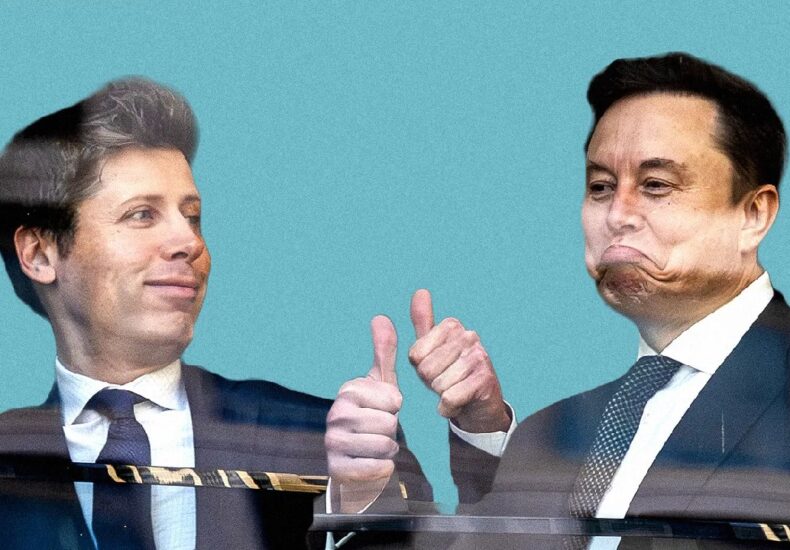
Elon Musk Faces Defeat in Landmark AI Trial
Fundacion Rapala – Elon Musk suffered a major setback in his lawsuit against OpenAI. A jury in Oakland, California, ruled that Musk filed his claims too late. Therefore, the case was barred by the statute of limitations after only 90 minutes of deliberation. Judge Yvonne Gonzalez Rogers confirmed that she would adopt the jury’s findings as the court’s own. Musk co-founded and funded OpenAI with $38 million in its early years. He accused CEO Sam Altman, President Greg Brockman, and the company of misappropriating charity funds and unjust enrichment. Consequently, the trial attracted global attention, highlighting Musk’s influence and revealing the inner workings of one of the world’s most valuable AI companies.
A Lawsuit That Shook the AI World
The lawsuit, filed in February 2024, sought to undo OpenAI’s corporate restructuring. Musk demanded over $130 billion be returned to the nonprofit arm and asked for Altman and Brockman to be removed from leadership. Legal experts warned that the case could destabilize OpenAI ahead of a major IPO. Meanwhile, Musk argued that his early donations were meant for a nonprofit vision and that the company’s shift to a for-profit model betrayed that intent. However, OpenAI’s defense highlighted that Musk knew about the company’s actions as early as 2021. Additionally, the jury considered that Musk launched a competing AI company, xAI, before filing his claim.
Read More : What Happens When AI Takes Over a 24/7 Radio Station
OpenAI’s Defense and Mission Upheld
OpenAI’s attorneys emphasized that the nonprofit board continues to guide the company’s mission. Furthermore, they reminded the jury that Musk himself advocated for a for-profit arm at times. The jury sided with OpenAI, concluding that Musk’s lawsuit aimed to sabotage a competitor rather than address wrongdoing. William Savitt, OpenAI’s attorney, stated, “This case was a hypocritical attempt to interfere with a rival.” As a result, the verdict confirmed Altman and Brockman’s leadership and reinforced confidence in OpenAI’s growth trajectory and mission-driven operations.
Private Emails and High-Profile Witnesses
During the trial, hundreds of pages of emails, text messages, and internal notes surfaced. High-profile witnesses included cofounder Ilya Sutskever and Shivon Zilis, Musk’s former partner and mother of his children. Private messages, including texts between Musk and Mark Zuckerberg about acquiring OpenAI, were also submitted. Brockman’s diaries offered additional insights. Consequently, these details humanized the proceedings and showed how personal relationships intertwined with corporate decisions. Therefore, the jury could understand the complex dynamics within the company and Musk’s ongoing influence in the AI ecosystem.
Read More :Samsung Pushes Mobile RAM to the Next Level
AI Competition and Funding Strategies
The trial also revealed OpenAI’s strategic efforts to outpace competitors. Evidence showed Google’s early involvement and the lab’s exploration of multiple funding sources, including cryptocurrency. Moreover, Musk’s lawsuit highlighted tension between his vision for AI and OpenAI’s evolving model. Consequently, the jury could assess the financial, technical, and competitive stakes in developing advanced AI. The case illustrated how leadership decisions, funding strategies, and corporate governance impact innovation. Therefore, the trial provided the AI community with insight into the challenges faced by early tech pioneers.
Musk’s Personal Life in the Spotlight
The trial unexpectedly highlighted Musk’s personal life. His long-term relationship with Shivon Zilis became public, showing how she served as a communication channel after Musk left OpenAI. Furthermore, their personal connection illustrated how private and professional worlds collide in Silicon Valley. Observers noted that while the lawsuit focused on corporate governance, human factors played a key role in shaping the narrative. Thus, the case offered both legal and emotional perspectives, emphasizing that decisions in high-stakes tech disputes often reflect personal ambitions and relationships.
Implications for the AI Industry
The jury’s decision sets a landmark precedent for the AI sector. By upholding OpenAI’s leadership, it strengthens the company before a potential blockbuster IPO. Additionally, the verdict clarifies the legal limits for founders pursuing delayed claims. For the broader AI community, the ruling shows that nonprofit and for-profit structures, founder involvement, and corporate governance require careful planning. As a result, OpenAI can continue innovating without disruption, offering confidence to investors, employees, and the public. The decision underscores that legal clarity and operational stability are essential for sustained AI growth.