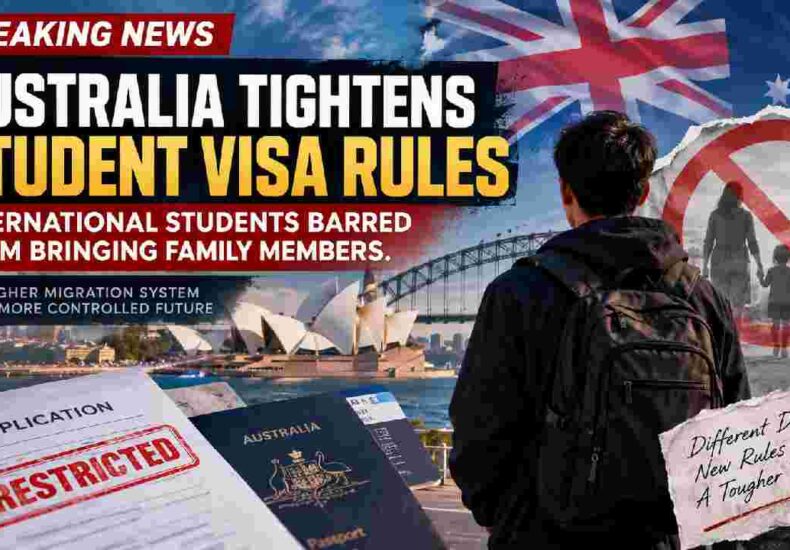
Australia Tightens Visa Rules, International Students May Lose Family Rights
Fundacion Rapala – The Australia Student Visa Rules are entering a stricter period. The government has announced new limits for international students who want to bring family members. The policy is part of a wider plan to reduce migration and improve control over temporary visas. For many students, the change creates more than a legal issue. It may also affect important family decisions. Some students have dreamed of studying in Australia with a partner or child beside them. Now, many future applicants may need to rethink those plans. Home Affairs Minister Tony Burke announced the migration changes on September 17, 2026. The government says stronger rules are needed to create a more controlled migration system. However, the impact will reach universities, families, and communities. As a result, future students will need to study the visa rules carefully before making major plans.
Australia Student Visa Rules Become Stricter
Australia is changing the way its student visa system works. Under the new approach, many international students will face limits on bringing family members. This means a spouse or child may not always qualify as a secondary applicant. However, the restriction does not apply equally to every student. The government has announced exemptions for some groups, including PhD students. Students from ASEAN and Pacific countries will also receive special treatment under the new framework. In addition, the government says families already living together in Australia will not be separated. These details are important for people planning to study abroad. Previously, some applicants could build their education plans around moving with their families. Now, they may need to check their eligibility much earlier. Therefore, visa conditions could become an important factor when students compare Australia with other study destinations.
Read More : A Billionaire’s Humbling Experiment: Spending a Day on Mumbai’s Streets as a Beggar
Migration Targets Drive the New Policy
The visa changes are part of Australia’s wider effort to reduce net overseas migration. The government wants migration numbers to fall over the next few years. It aims to bring net overseas migration down to 225,000 by 2027–28. Officials believe tighter temporary visa rules can help reach that goal. Australia has experienced strong migration growth in recent years. At the same time, housing costs and rental pressure have become major public concerns. The government says migration policy must respond to those pressures. As a result, officials are reviewing how temporary migrants enter and remain in the country. International students are only one part of this larger plan. Working holiday makers, visitors, and other temporary visa holders also face closer controls. The government is especially focused on people who stay beyond their visa conditions. Therefore, the latest student visa rules represent one part of a much wider migration reform.
Families Face Difficult Choices About Studying Abroad
For many international students, studying overseas is also a family journey. A university offer can bring excitement, hope, and new opportunities. However, the experience becomes more difficult when family members cannot travel together. A student with young children may need to consider childcare and living arrangements. Couples could also face long periods apart. Travel costs may create another financial burden. Because of these challenges, the new rules may influence where some students choose to study. Australia remains an attractive destination because of its universities and lifestyle. Still, family needs can be just as important as academic rankings. The announced exemptions may help some applicants avoid these problems. PhD students and students from ASEAN and Pacific nations are among those treated differently. Even so, future applicants should check official visa conditions carefully. Early planning can help families understand what options remain available before they spend money on applications.
Read More : Historic Bangsamoro Election Moves Forward Under Tight Security
Australia Moves Against Visa Hopping
The government also wants to reduce a practice often called visa hopping. This happens when temporary migrants repeatedly move between visa types to extend their stay. Student visas have become part of the government’s effort to address this issue. Under the new system, changing courses may require a fresh visa application in some cases. Students will also face closer attention when moving from one qualification to another. The government wants study choices to show clear academic progress. For example, a graduate may move from a bachelor’s degree to a master’s program. However, repeatedly choosing lower-level courses could attract greater attention from immigration authorities. Officials say these changes are designed to protect the student visa system. They also want visas to support genuine education rather than long-term temporary residence. Consequently, students must think carefully before changing courses. A simple academic decision may now have a stronger effect on a person’s immigration status.
Temporary Visa Holders Face Greater Scrutiny
Australia’s migration reform extends beyond international students. The government is also reviewing other temporary visa pathways. Visitors, working holiday makers, and people who overstay visas will face stronger controls. Authorities want temporary visas to serve their original purpose. They also want more people to leave Australia when their legal stay ends. Another area of concern involves people who move between several temporary visa categories. The government believes this can make migration numbers harder to manage. Therefore, new rules will give officials more ways to control how migrants remain in the country. Some visitor visas may also carry conditions that limit further visa applications after arrival. At the same time, migration agents could face closer scrutiny if they support applications without proper grounds. Together, these measures show a clear change in direction. Australia still welcomes migrants, but temporary pathways are becoming more closely managed than before.
Universities Monitor the Impact on International Students
Australian universities are watching the policy changes closely. International education brings students from many parts of the world into Australian classrooms. It also provides major economic value to the country. However, students consider more than academic quality when choosing a university abroad. Visa rules, housing costs, employment options, and family arrangements can shape their decisions. The new family restrictions could therefore influence some future applications. A single student may find the changes manageable. In contrast, a parent with children could see the situation very differently. Universities may need to explain these rules clearly during the application process. Students should understand their visa options before paying tuition deposits or arranging accommodation. Clear information could prevent costly mistakes later. Meanwhile, exemptions for some students may protect important education links with nearby regions. Even so, universities will need to watch whether stricter visa conditions change Australia’s appeal in the global education market.
Future Students Need to Prepare Earlier
Students planning to study in Australia should now begin their visa research much earlier. Waiting until after receiving a university offer could create problems. Applicants with partners or children should first check whether they qualify for an exemption. They should also review how future course changes could affect their visa status. Official government information is especially important because immigration rules can change. Students should avoid relying only on social media posts or informal advice. Instead, they need to confirm the conditions that apply to their own situation. Australia continues to offer education opportunities for international students. However, the path is becoming more controlled and carefully managed. For some people, the new rules may simply require extra preparation. For others, they could change an important family decision. Careful planning can reduce uncertainty and help students understand the costs, limits, and responsibilities before starting a new chapter in Australia.