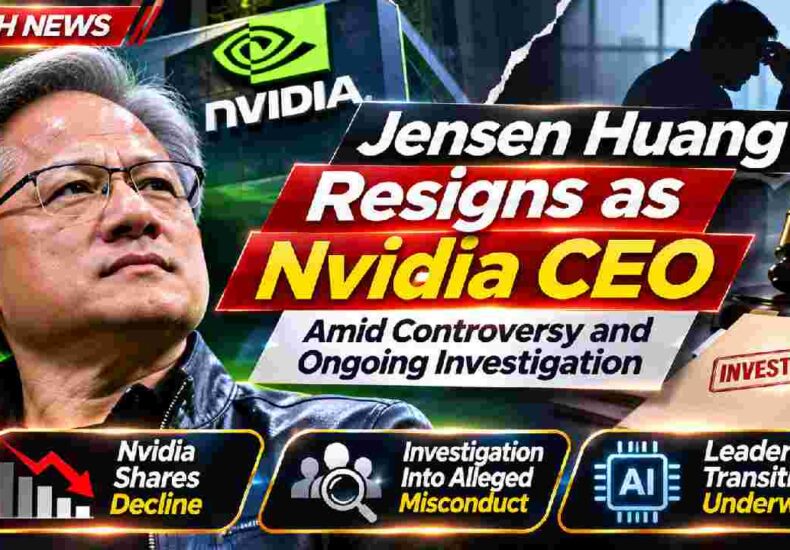
Nvidia CEO Jensen Huang Faces Leadership Uncertainty Amid Allegations
Fundacion Rapala – Nvidia CEO Jensen Huang has become the subject of renewed public attention following a November 12, 2026, report describing allegations involving his personal relationships. The Indonesian news outlet Kompas.com reported that Nvidia’s board was considering removing Huang from his leadership position. However, the reported discussions should not be mistaken for a confirmed dismissal or an official corporate decision. Huang has played a central role in transforming Nvidia into a major force in artificial intelligence and semiconductor technology. Consequently, questions about his future leadership could carry significant implications for employees, investors, and technology partners worldwide. The allegations also raise sensitive questions about personal conduct, professional responsibilities, and corporate governance. Nevertheless, unverified claims involving private relationships require particularly careful reporting. For now, the distinction between allegations, documented evidence, and official company statements remains essential to understanding the developing situation without drawing premature conclusions about Huang or Nvidia.
Jensen Huang Resigns as Nvidia Announces Major Leadership Transition
The situation has developed beyond the initial reports of a possible dismissal. On November 12, 2026, Nvidia officially announced that Jensen Huang had resigned as president, chief executive officer, and board member, effective immediately. The company appointed Chief Financial Officer Colette Kress as interim CEO while introducing Harvey C. Jones as its first board chair. This development marks a historic leadership change for the semiconductor company Huang helped establish. For employees who have spent years working under his direction, the transition introduces a new chapter filled with both uncertainty and responsibility. Meanwhile, investors must assess how the company will maintain its technological momentum without its longtime leader. Nvidia’s announcement confirms the resignation, although the precise considerations behind the decision should not be reduced to individual allegations without supporting evidence. The company’s next challenge involves preserving operational stability and confidence during this unexpected transition.
Read More : Rising Cyberattack Threats Push Crypto Industry to Strengthen Digital Security
Reports of Personal Relationships Raise Corporate Governance Questions
The controversy intensified after reports described two relationships involving Huang and women connected to the technology industry. According to Reuters, citing reporting from The Wall Street Journal and The New York Times, one allegation concerned Alice Huang, an executive associated with Singapore-based data center company Megaspeed. Another concerned Kimberly Powell, Nvidia’s vice president of healthcare. On November 8, Huang acknowledged marital infidelity in a message to employees and apologized to his family and colleagues. However, that acknowledgment should not be treated as independent confirmation of every allegation reported about the individuals involved. The controversy has also raised questions about professional boundaries, potential conflicts of interest, and the responsibilities of senior executives. For employees, corporate leadership involves more than financial performance. Trust, fairness, and accountability also shape workplace confidence. Consequently, the reported relationships have become part of a broader discussion about governance at influential technology companies.
Nvidia Launches Independent Investigation Into Security Concerns
Beyond the personal controversy, Nvidia’s board initiated an independent investigation following reports that Huang may have been targeted by a foreign intelligence operation. The company announced the investigation on November 8, emphasizing the importance of protecting national security and corporate information. Subsequently, independent directors appointed outside legal advisers to examine the circumstances surrounding the reports. The allegations involving Alice Huang attracted particular attention because of her professional connections within the data center industry. Nevertheless, suspicions reported by intelligence sources do not establish that she committed espionage. Nvidia initially stated that it had no reason to believe company secrets or national security had been compromised. This distinction remains essential as the investigation continues. For Nvidia’s international partners, protecting sensitive information is a fundamental business responsibility. Meanwhile, the independent review offers a formal process for evaluating evidence rather than relying exclusively on speculation or public accusations.
Read More : Muslim Politicians Make History in the 2026 US Midterm Elections
Nvidia Shares Face Pressure as Investors Assess Leadership Risks
Financial markets reacted sharply as reports about Huang’s future circulated. Reuters reported that Nvidia shares declined approximately eight percent during extended trading following revelations about the controversy and discussions involving the board. The movement reflected investor concerns about leadership continuity at a company central to the global artificial intelligence industry. Nvidia’s graphics processing units support demanding computing tasks, including AI model training and large-scale data center operations. Consequently, developments affecting its management can influence expectations across the broader technology sector. However, a short-term share price decline does not necessarily establish the company’s long-term financial outlook. Investors must also consider product demand, competition, earnings performance, and broader market conditions. Meanwhile, the confirmed leadership transition introduces additional questions about strategic direction. For shareholders, understanding how Nvidia manages this change may become more important than reacting solely to the controversy surrounding its former chief executive.
Nvidia’s Future Depends on Stability Beyond Its Founder
Jensen Huang’s departure represents a significant turning point for a company closely associated with his leadership and public identity. Over decades, Huang became one of the most recognizable figures in semiconductor development and the expansion of artificial intelligence infrastructure. His departure now places considerable responsibility on Nvidia’s remaining executives and directors. Colette Kress, appointed interim CEO, must help maintain business continuity while the company navigates its leadership transition. Meanwhile, employees and customers will look for reassurance that product development, partnerships, and operational commitments remain on track. The situation also highlights why succession planning matters for organizations built around influential founders. Strong governance requires institutions capable of functioning beyond any individual leader. Although the controversy has attracted substantial attention, Nvidia’s long-term performance will depend on its technology, workforce, customers, and management decisions. The coming period will test how effectively the company adapts to its new leadership structure.