Why Iran Is Keeping Mojtaba Khamenei’s Voice Secret Amid Intelligence Fears
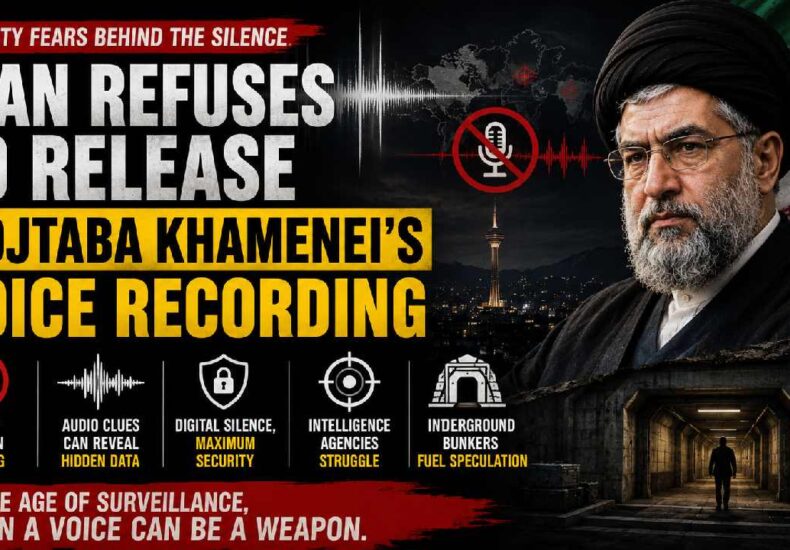
Fundacion Rapala – Iran has decided not to release any official recording of Mojtaba Khamenei’s voice. Officials believe the audio could expose important security details. According to Iranian media, modern intelligence tools can study sound with remarkable accuracy. As a result, even a short recording may reveal valuable clues. Therefore, authorities prefer to avoid unnecessary risks. This decision reflects a broader security policy rather than media censorship alone. It also shows how digital technology has changed national defense. Today, governments protect every possible source of information. Even an ordinary speech may become useful intelligence. Consequently, Iran has chosen to remain extremely cautious while regional tensions continue to grow.
How Audio Analysis Can Reveal Hidden Locations
A voice recording contains much more than spoken words. Every room creates unique sound reflections. These acoustic patterns may help analysts identify where a recording was made. In addition, electrical noise can reveal information about the local power system. Experts may also estimate the recording date and time. Furthermore, every microphone leaves a different digital signature. Recording devices process sound in their own way. Background sounds can also provide useful clues. Air conditioners, generators, and ventilation systems all produce recognizable noise. Finally, advanced software can study breathing patterns, pauses, and speech rhythm. Together, these details may help investigators narrow down a person’s location.
Read More : Military Bus and Civilian Bus
Digital Silence Has Become a Key Security Measure
Reports indicate that Mojtaba Khamenei has avoided digital devices for several months. He reportedly does not use a mobile phone or laptop. Instead, handwritten messages are believed to be delivered by trusted couriers. This approach greatly limits electronic tracking. As a result, intelligence agencies receive very little digital data. Although the method seems traditional, it remains highly effective. Many security experts believe digital silence reduces surveillance risks. It also removes valuable metadata that investigators often analyze. Consequently, Iran appears committed to limiting every possible electronic trace. This strategy reflects a growing focus on operational security in today’s digital world.
Intelligence Agencies Face Major Challenges
Western intelligence agencies reportedly continue searching for reliable information. However, the task has become increasingly difficult. Without digital communication, investigators lose many common tracking methods. Therefore, agencies must rely on satellite imagery, human intelligence, and indirect evidence. Even then, confirming new information remains challenging. Reports also suggest Iran uses several security layers. These measures may include secure transportation and misleading operational tactics. Such practices create additional uncertainty. As a result, intelligence organizations need more time and resources. Even experienced analysts admit that reliable verification is difficult when electronic evidence is almost nonexistent.
Read More :Trump Signals Closer Decision
Underground Facilities Continue to Fuel Speculation
Mojtaba Khamenei has rarely appeared in public since taking office. Because of this absence, speculation has continued to grow. Some analysts believe he operates from fortified underground facilities. Others point to tunnel networks near the holy city of Qom. These locations could provide additional physical protection. Meanwhile, Iranian officials have released very little information. That limited communication has encouraged further rumors. He also skipped the traditional Nowruz speech. Instead, only a brief message was reportedly shared through Telegram. Although President Masoud Pezeshkian said he met Mojtaba, outside intelligence agencies have not independently verified the details.
Modern Technology Is Changing National Security
Technology has transformed intelligence work around the world. Today, audio files contain valuable information beyond spoken language. Artificial intelligence can examine sound with impressive precision. As a result, governments have become more careful when releasing recordings. Leaders in sensitive positions often reduce their public exposure. They also limit unnecessary digital communication. Every electronic trace may become useful intelligence. Therefore, information security now includes much more than encrypted messages. It also covers voices, background sounds, and device signatures. Iran’s reported decision highlights this growing reality. In today’s security environment, protecting digital traces has become as important as protecting physical locations.