15 Remarkable American Places That Existed Long Before the United States Was Born
Fundacion Rapala – The story of the United States officially began in 1776. However, the history of its land reaches much further into the past. Long before independence, Native American communities built thriving societies across the continent. They created villages, sacred sites, trade routes, and cultural traditions that lasted for centuries. Later, European settlers founded towns that still stand today. In addition, scientists continue to uncover fossils and ancient human footprints that reveal an even older history. Together, these discoveries show that America’s story began long before the nation’s founding. Exploring these remarkable places is more than a history lesson. It is an opportunity to understand the people, cultures, and landscapes that shaped the country over thousands of years. Every destination offers a unique window into a fascinating and often overlooked chapter of American heritage.
Indigenous Civilizations Built Remarkable Communities
Long before European explorers arrived, Native American societies had already established impressive communities across North America. They developed farming methods, trade networks, and spiritual traditions that supported large populations. Moreover, they created ceremonial centers that reflected advanced knowledge of nature and astronomy. Sites such as Effigy Mounds in Iowa, Hopewell Earthworks in Ohio, and Cahokia in Illinois still amaze archaeologists today. Their carefully designed earthworks reveal both engineering skill and cultural significance. Many structures also align with the movements of the sun and moon. As a result, researchers continue to learn more about these ancient civilizations every year. These communities were highly organized and deeply connected through trade and shared traditions. Their achievements remain an important part of American history and deserve greater recognition from visitors around the world.
Read More : Sydney Sweeney and Scooter Braun Caught Getting
Taos Pueblo Remains a Living Piece of History
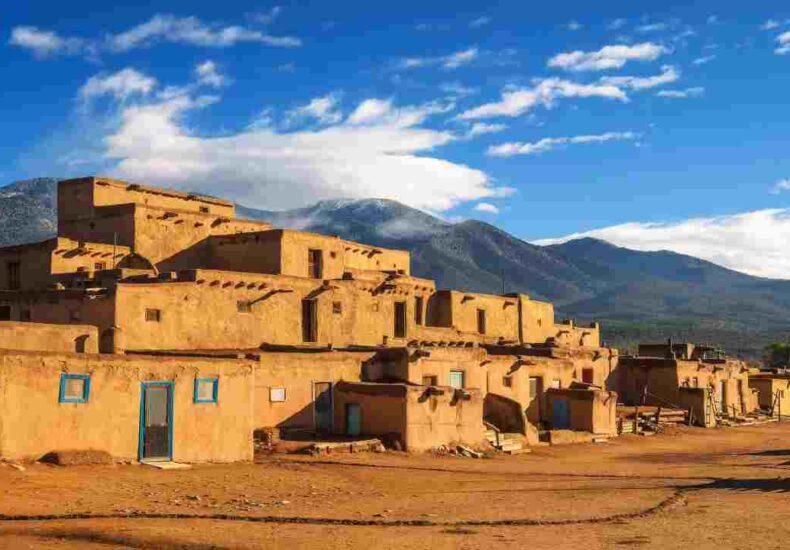
Taos Pueblo in northern New Mexico is one of the oldest continuously inhabited communities in North America. Construction began between 1000 and 1450, and many families still live there today. Unlike many historic sites, Taos Pueblo is not simply an archaeological attraction. Instead, it remains an active community where traditions continue from one generation to the next. Visitors can explore adobe buildings, learn about Indigenous culture, and experience authentic local history. Furthermore, the village looks remarkably similar to how it appeared when Spanish explorers first arrived in the sixteenth century. This remarkable continuity makes Taos Pueblo truly unique. It demonstrates how cultural identity can survive for centuries despite changing political and social conditions. Consequently, the site continues to attract historians, travelers, and people interested in Native American heritage.
Colonial Settlements Helped Shape Early America
Several famous American landmarks were established long before the Declaration of Independence. Jamestown, founded in 1607, became the first permanent English settlement in North America. Although the early years were extremely difficult, the colony eventually survived and expanded. Meanwhile, Harvard University opened in 1636 with only a few students. Today, it is one of the world’s leading universities. The French Quarter in New Orleans also dates back to the colonial period. Its distinctive street layout has survived for centuries. These places remind visitors that America’s development began well before 1776. Each location tells a different story about perseverance, education, trade, and cultural exchange. Together, they illustrate how early settlements helped build the foundation for the modern United States.
Read More :Charli XCX Says She’s Staying Off Social Media for Mental
Ancient Landscapes Reveal Earth’s Deep History
Some of America’s oldest landmarks were created by nature rather than people. Chicago’s Field Museum displays Sue, one of the largest and best-preserved Tyrannosaurus rex skeletons ever discovered. The fossil dates back around 67 million years. Meanwhile, White Sands National Park in New Mexico preserves ancient human footprints that are more than 21,000 years old. These discoveries continue to reshape scientific understanding of early life in North America. Furthermore, they demonstrate that the continent has witnessed extraordinary changes over millions of years. Scientists still study these remarkable sites because new evidence continues to emerge. Every fossil and footprint helps explain another part of Earth’s long history. Consequently, these natural landmarks are just as important as historic settlements and cultural monuments.
Sacred Places Preserve Spiritual Traditions
Many ancient American sites served spiritual rather than political purposes. They became places where communities gathered for ceremonies, celebrations, and important rituals. For example, Puʻuhonua o Hōnaunau in Hawaii offered protection to people seeking refuge under ancient Hawaiian law. Likewise, Effigy Mounds and Hopewell Earthworks reflected strong spiritual beliefs through carefully designed landscapes. These sacred places remind visitors that religion and culture were closely connected in Indigenous societies. In addition, they highlight the importance of respecting traditions that continue today. Protecting these landmarks is about more than preserving history. It also honors the descendants who still value these places as part of their cultural identity. Therefore, these sites remain meaningful for both education and cultural preservation.
Exploring America’s History Beyond 1776
Traveling to places older than the United States changes the way people view American history. Independence remains an important milestone, yet it represents only one chapter in a much longer story. Ancient settlements, sacred landscapes, colonial towns, universities, and prehistoric discoveries all contribute to the nation’s remarkable heritage. Each destination offers lessons about resilience, innovation, and cultural diversity. Moreover, these places encourage visitors to appreciate the many civilizations that shaped North America long before modern borders existed. Every journey reveals another layer of history waiting to be explored. As a result, travelers leave with a deeper understanding of America’s rich past and a stronger appreciation for the people whose stories continue to influence the nation today.