Trump’s Secret Air Force One Transfer Sparks Security and Transparency Questions
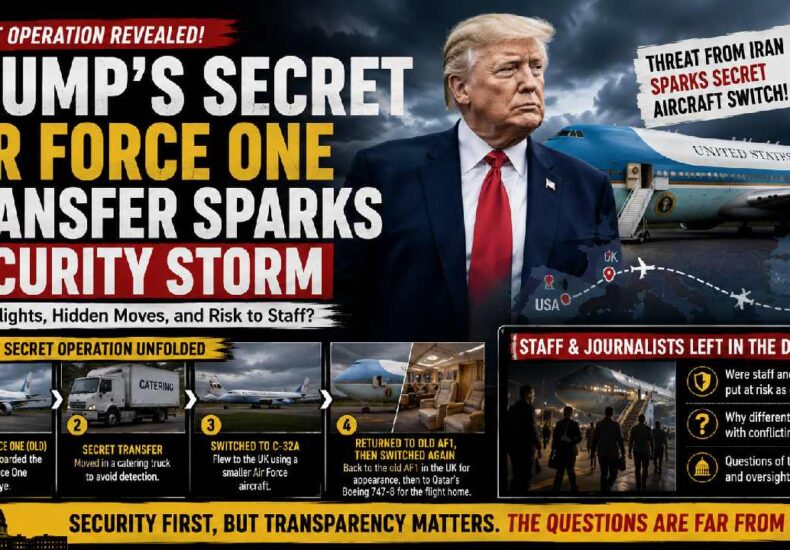
Fundacion Rapala – A secret operation involving Donald Trump’s presidential aircraft has sparked debate in Washington. The mission took place as Trump left Türkiye amid security concerns linked to Iran. At first, the aircraft change appeared to be a normal security measure. However, later reports revealed a much more complex operation. Trump reportedly moved between several aircraft during his journey. The plan aimed to hide his exact location and make his movements harder to track. As a result, the Trump Air Force One operation quickly attracted public attention. Presidential security often requires secrecy when officials detect a possible threat. Still, the operation raised questions because White House staff and journalists reportedly remained on another aircraft. They may not have known the full situation. Therefore, the debate now goes beyond Trump’s personal safety. It also focuses on communication, responsibility, and the protection of everyone traveling with the president.
A Catering Truck Helped Hide Trump’s Movement
One unusual part of the operation involved a catering truck. Trump reportedly boarded the older Air Force One before leaving Türkiye. However, he did not remain there for the next stage of his journey. Instead, security personnel reportedly moved him secretly using a catering vehicle. Trump then boarded a smaller Air Force C-32A aircraft. The unusual transfer helped conceal which plane was actually carrying the president. Therefore, the Trump Air Force One strategy relied on more than aircraft changes alone. Ground vehicles also became part of the security plan. Such methods can make presidential movements harder for potential attackers to follow. However, they also require careful coordination between many teams. Pilots, security officers, military personnel, and ground crews must work together. Even a small mistake could create additional risk. For that reason, the operation shows how complicated presidential travel can become when officials believe a serious threat exists.
Read More : Russia’s Kuryer Laser Robot Offers a New Approach to
Multiple Aircraft Created a Complex Decoy Strategy
The operation reportedly became more complicated when Trump reached the United Kingdom. He later returned to the older Air Force One as part of the travel plan. Trump also appeared outside the aircraft for media coverage before another reported change took place. He eventually used the Boeing 747-8 provided by Qatar for his return to the United States. These aircraft changes created uncertainty about Trump’s actual location. Earlier explanations suggested the changes were related to an inspection of the newer aircraft. However, later reporting described a security operation designed around concealment. Consequently, the Trump Air Force One story developed into a wider political issue. Governments cannot always reveal security plans while they are active. Doing so could put a president in danger. Still, different public explanations can create confusion afterward. Clear communication becomes important once the immediate threat has passed and sensitive details can safely receive public scrutiny.
Staff and Journalists Became Part of the Debate
The strongest criticism concerns people who reportedly remained aboard the older presidential aircraft. White House staff and journalists were still traveling while Trump used another plane. Therefore, questions emerged about whether those passengers faced extra danger. Anyone tracking the presidential aircraft could have assumed Trump remained aboard. Former Secret Service agent Robert McDonald raised concerns about security for people on the other aircraft during a CNN interview. His comments added another dimension to the Trump Air Force One controversy. Presidential protection naturally focuses on keeping the president safe. However, official trips also involve journalists, advisers, pilots, military personnel, and support teams. Their safety remains important as well. At the same time, the complete threat assessment has not been publicly disclosed. Therefore, it is difficult to measure the exact level of risk they faced. The controversy instead highlights difficult choices that can emerge during secret security operations.
Read More :Australian Police Investigate Mysterious Suitcase, Only to
Security Needs Can Clash With Public Transparency
Presidential protection often depends on keeping important information secret. Officials cannot reveal flight routes or security procedures while a threat remains active. Such information could help people who want to harm the president. However, secrecy creates another challenge in a democratic system. Citizens and lawmakers expect the government to explain major decisions once it becomes safe to do so. This tension sits at the center of the Trump Air Force One debate. The operation may have required deception to protect Trump during his journey. Yet questions remain about how officials explained those decisions afterward. Transparency does not mean publishing every sensitive security detail. Instead, authorities can provide enough information to explain why unusual measures were necessary. They can also address concerns about other passengers. Therefore, communication becomes essential after a secret mission ends. Without clear explanations, even a successful security operation can create doubts about accountability and public trust.
Secret Presidential Travel Has Happened Before
Using deception to protect an American president is not a completely new strategy. Previous administrations have also changed travel procedures when officials detected serious threats. In 2000, President Bill Clinton used an unmarked aircraft during a visit to Pakistan. Security officials were concerned about a possible terrorist attack. Therefore, the unusual flight arrangement helped conceal his movement. However, the Clinton administration later disclosed the deception after the president landed. Officials also reportedly briefed a White House press representative about the security plan. This historical example provides useful context for the Trump Air Force One controversy. Of course, every presidential security threat is different. A strategy used decades ago cannot automatically become the standard for another situation. Still, previous cases show that operational secrecy and later transparency can exist together. Governments can protect sensitive information during a mission while providing greater clarity after the immediate security danger has ended.
The Air Force One Story Raises Broader Questions
The controversy reaches beyond aircraft, travel routes, and presidential security. It raises questions about how governments balance protection with accountability. The Trump Air Force One operation shows how far security officials may go when they believe a president faces danger. At the same time, complex deception can affect many people beyond the person being protected. Staff members, journalists, military crews, and security personnel may all become part of the operation. Therefore, their safety deserves attention as well. The public may accept that some details must remain secret during a dangerous journey. However, questions can continue after the operation ends. Lawmakers and journalists may seek information about oversight, risk, and decision-making. Ultimately, effective presidential security depends on more than secrecy. It also requires careful planning and responsible communication. When those elements work together, authorities can protect national leaders while maintaining public confidence in the institutions responsible for their safety.