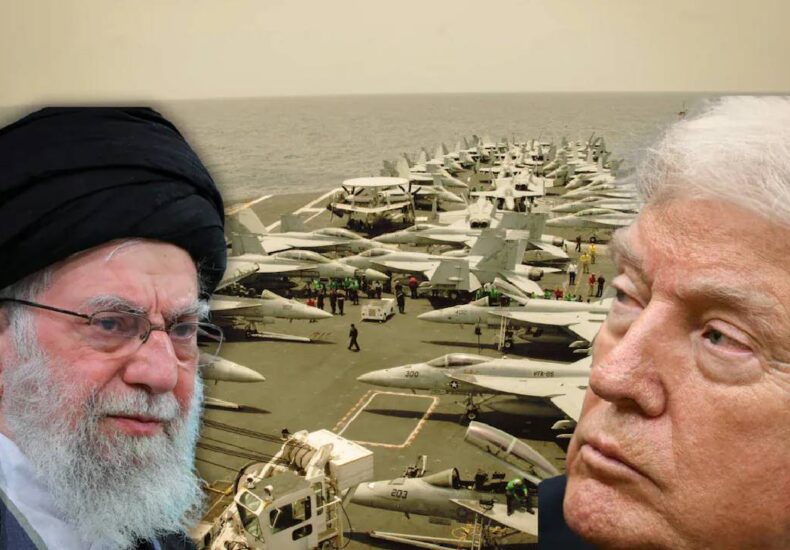
Will Trump Escalate the Conflict? A Tense Moment in US-Iran Relations
Fundacion Rapala – The geopolitical atmosphere surrounding Iran and the United States has grown increasingly tense in recent weeks. Observers now describe the situation as one of the most fragile in decades. The presence of multiple carrier strike groups in the region signals not only military readiness but also strategic intent. This rare deployment reflects a shift in posture, suggesting that Washington wants to maintain pressure at the highest level. At the same time, Iran faces mounting economic and political strain due to tightening maritime restrictions. These developments create a volatile mix, where diplomacy and military action coexist uneasily. As both sides calculate their next move, the risk of escalation continues to rise, leaving the international community watching closely and with growing concern.
Iran’s Diplomatic Moves Reveal Urgency
Amid this pressure, Iran has intensified its diplomatic outreach in a bid to ease tensions. Seyed Abbas Araghchi embarked on a rapid series of visits to key regional players, including Pakistan and Oman. These visits were not ceremonial. Instead, they reflected a strategic attempt to reopen dialogue channels and secure breathing room. Pakistan, often seen as a bridge between competing powers, offered a platform for indirect communication. Meanwhile, Oman continued its long-standing role as a quiet mediator. Through these efforts, Tehran signaled its willingness to negotiate, but only under conditions that respect its sovereignty. The urgency behind these diplomatic steps highlights how critical the current moment has become for Iran’s leadership.
Read More : The Importance of the 2026 NPT Conference: Nuclear
Washington’s Calculated Silence and Sudden Moves
While Iran pushed for dialogue, Donald Trump adopted a more cautious yet assertive stance. His decision to cancel a planned US delegation to Islamabad sent a clear message. Washington does not appear eager to rush into negotiations. Instead, it seems to favor a strategy of sustained pressure. Trump’s reasoning, which emphasized efficiency and confidence in US leverage, reflects a broader belief that time works in America’s favor. By delaying engagement, the administration signals that it expects Iran to make concessions first. This approach creates uncertainty, as it leaves open the possibility of both renewed talks and further escalation. The absence of direct dialogue adds complexity to an already fragile situation.
Internal Pressures Shape Iran’s Response
Inside Iran, the situation grows more complicated as internal dynamics influence external policy. President Masoud Pezeshkian faces competing pressures from pragmatic factions and hardline elements such as the Islamic Revolutionary Guard Corps. These divisions shape how Iran responds to external threats. While some leaders advocate for negotiation, others push for resistance. This internal tension limits Tehran’s flexibility and makes compromise more difficult. At the same time, the economic impact of maritime restrictions continues to strain the country’s resources. These combined pressures create a challenging environment for decision-making. Iran must balance national pride with practical needs, all while navigating a rapidly evolving geopolitical landscape.
Read More : Big Businessman Implicated in Money Laundering Case
Military Presence Raises the Stakes
The deployment of US military assets in the region has significantly raised the stakes. The presence of multiple carrier strike groups signals readiness for a range of scenarios, from deterrence to direct action. Such a buildup rarely occurs without strategic intent. For Iran, this show of force represents both a threat and a warning. It underscores the seriousness of Washington’s position while also limiting Tehran’s options. Military power, in this context, becomes a tool of negotiation as much as a potential instrument of conflict. The visible nature of these deployments sends a message not only to Iran but also to allies and adversaries alike. It reinforces the idea that the situation has moved beyond routine tension into a more critical phase.
The Fragile Role of Backchannel Diplomacy
Despite the heightened tension, backchannel diplomacy continues to play a crucial role. Oman, in particular, remains a trusted intermediary, offering a discreet environment for sensitive discussions. These quiet efforts often carry more weight than public statements, as they allow both sides to explore options without political pressure. However, the success of such diplomacy depends on mutual willingness to engage. At present, that willingness appears uneven. While Iran actively seeks dialogue, the United States adopts a more measured approach. This imbalance complicates progress and prolongs uncertainty. Nevertheless, backchannel communication remains one of the few avenues available to prevent further escalation and keep the possibility of resolution alive.
A Region on Edge Awaits the Next Move
As events unfold, the Middle East stands on the edge of a potentially defining moment. Every decision made by Washington or Tehran carries significant consequences, not only for the two nations but for global stability. Allies watch closely, markets react cautiously, and ordinary citizens feel the ripple effects of uncertainty. The question of whether Trump will pursue further military action remains unanswered, yet it dominates strategic discussions. In this environment, even small developments can shift the balance. The coming days will likely determine whether the situation moves toward confrontation or cautious diplomacy. Until then, the world remains focused on a region where every move matters and every decision could reshape the future.