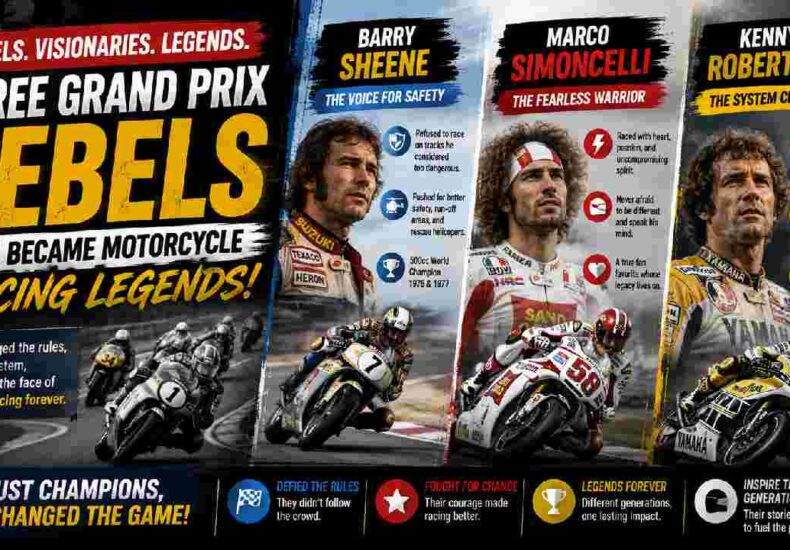
Three Grand Prix Rebels Who Became Motorcycle Racing Legends
Fundacion Rapala – The Grand Prix racing rebels were remembered for more than victories, trophies, and spectacular performances. Motorcycle racing has always celebrated speed, yet some riders built their legacy by challenging the sport itself. Barry Sheene, Marco Simoncelli, and Kenny Roberts Sr. came from different generations. However, each showed a willingness to question expectations and choose a different path. Their attitudes sometimes created tension with officials, competitors, or traditionalists. Still, their resistance often reflected strong personal convictions rather than rebellion for attention. Sheene openly questioned dangerous circuits. Simoncelli became known for an uncompromising personality and aggressive racing spirit. Roberts, meanwhile, challenged established structures and even explored the idea of building a motorcycle outside the conventional system. Their stories remind fans that racing history does not belong only to those who followed established rules. Sometimes, the riders willing to challenge them leave the deepest marks.
Barry Sheene Put Rider Safety Ahead of Tradition
Barry Sheene became one of motorcycle racing’s biggest personalities during the 1970s. The British rider won the 500cc world championship with Suzuki in 1976 and 1977. Yet his influence extended far beyond those titles. Sheene never hesitated to speak when he believed racing conditions placed riders in unnecessary danger. After competing in the Isle of Man Tourist Trophy, he refused to return because he considered its 60.8-kilometer Mountain Course too dangerous. That position frustrated some traditional TT supporters. Nevertheless, Sheene remained firm. He also skipped the 1976 world championship race at the 22.8-kilometer Nürburgring Nordschleife after securing the championship. For Sheene, tradition could not justify avoidable risk. His outspoken approach made him controversial, but it also showed something important. A champion could use his influence not only to win races, but also to question whether the environment around those races was safe enough.
Read More : Marco Bezzecchi Reveals Terrifyin
A Fatal Accident Strengthened Sheene’s Safety Campaign
Sheene’s concerns became even more urgent after Swiss rider Hans Stadelmann died following an accident at the Salzburgring Grand Prix. The tragedy reinforced Sheene’s belief that motorcycle racing needed stronger safety standards. He pushed for circuits to provide larger run-off areas, better emergency facilities, and rescue helicopters. Today, such demands may sound reasonable. During his era, however, dangerous tracks were often treated as an unavoidable part of a rider’s profession. That culture made Sheene’s position particularly significant. He understood the thrill that attracted competitors and spectators, but he refused to accept unnecessary danger as proof of courage. His willingness to challenge established thinking helped redefine what bravery could mean in motorsport. Instead of remaining silent, Sheene used his reputation to raise uncomfortable questions. Among the Grand Prix racing rebels, his story shows how resistance can eventually influence the values surrounding a sport, especially when safety and human lives are involved.
Marco Simoncelli Brought a Fearless Spirit to Grand Prix Racing
Marco Simoncelli represented a very different generation, yet his reputation carried a similar refusal to become predictable. The Italian rider attracted attention through his distinctive personality and aggressive approach on the track. Simoncelli did not race simply to occupy a safe position. He attacked opportunities, defended his ground, and often generated intense discussion among rivals and fans. That approach could make him controversial. However, it also gave his racing an unmistakable identity. Supporters saw a competitor who appeared unwilling to hide his personality simply to satisfy expectations. His presence brought emotion into a paddock where sporting pressure can encourage riders to become cautious with their words and actions. Simoncelli instead remained memorable because he felt authentic. His story demonstrates why motorcycle racing legends are not created by statistics alone. Fans often remember how a rider made them feel. Simoncelli’s courage, character, and uncompromising spirit ensured his name continued to resonate beyond individual results.
Read More :Casemiro Hails Lionel Messi as t
Kenny Roberts Sr. Challenged the Established Racing System
Kenny Roberts Sr. added another form of rebellion to Grand Prix history. Rather than limiting his challenges to battles on the circuit, the American questioned how the racing establishment operated. Roberts became known as a competitor willing to confront existing structures when he believed riders or teams deserved something different. That independent mindset eventually extended toward the ambitious idea of creating machinery outside the usual path. Such thinking required more than confidence. Grand Prix racing depended heavily on manufacturers, regulations, and established relationships. Challenging that environment meant accepting considerable professional risk. Roberts nevertheless represented a generation that increasingly understood the influence top riders could exercise. His approach helped expand the image of a racer beyond someone who simply followed instructions and competed. Like Sheene, he recognized that success could provide a platform to demand change. That determination helped make Roberts one of the most influential figures among the Grand Prix racing rebels remembered across generations.
Rebellion Sometimes Becomes the Beginning of Progress
Calling these riders rebels can sound negative at first. Yet their stories reveal a more complicated reality. Challenging authority does not automatically mean rejecting discipline or responsibility. In Grand Prix racing, disagreement can expose problems that become invisible when everyone accepts existing practices. Sheene’s criticism of dangerous circuits is a clear example. His demands placed rider welfare ahead of tradition. Roberts showed that competitors could question established structures rather than quietly accept every decision. Simoncelli, meanwhile, demonstrated the emotional power of maintaining an individual identity inside an intensely competitive environment. None followed exactly the same path, and their motivations were not identical. Still, each challenged the idea that a successful rider must always remain agreeable. Motorsport develops through technology, but culture also changes because individuals ask difficult questions. In that sense, rebellion can become constructive. What appears disruptive in one era may eventually help the next generation imagine safer conditions, greater independence, or a different way forward.
Their Legacies Reach Far Beyond Championship Trophies
Championship statistics remain an important part of motorcycle racing history, but they cannot explain why certain riders become cultural icons. Sheene’s world titles matter, yet so does his willingness to confront dangerous racing conditions. Roberts’ achievements remain significant, but his independent thinking also shaped how people viewed a rider’s influence. Simoncelli left a different emotional legacy through a personality and racing style that refused to disappear into the background. Together, these Grand Prix racing rebels show that legends often emerge from a combination of talent, courage, conviction, and character. They were not remembered because they disagreed with everyone. They became memorable because they were prepared to stand behind their beliefs when doing so carried consequences. Decades later, their stories still invite discussion. Motorcycle racing will always need fast riders. Yet its history suggests that the people brave enough to challenge accepted ideas can influence the sport long after the engines fall silent.