UAE Condemns Iran After Expanding Hormuz Strait Blockade Into Emirati Waters
Fundacion Rapala – Tensions in the Gulf region escalated again after Iran announced the expansion of its controlled maritime zone in the Strait of Hormuz, including waters claimed by the United Arab Emirates. The decision immediately triggered a strong reaction from Abu Dhabi, which described the move as a direct threat to regional stability and international navigation freedom. The situation quickly gained global attention because the Strait of Hormuz remains one of the world’s most important energy trade routes. Any disruption in the area can affect oil prices, shipping activity, and economic stability across multiple continents. Since military tensions involving Iran, Israel, and the United States intensified earlier in 2026, many analysts have warned that the Gulf region remains highly vulnerable. Iran’s latest action has now increased fears that the ongoing geopolitical crisis could expand into a larger international confrontation.
UAE Rejects Iran’s Maritime Claims Strongly
The United Arab Emirates responded quickly through presidential adviser Anwar Gargash, who criticized Iran’s maritime claims on social media platform X. Gargash described Tehran’s attempt to control parts of the Strait of Hormuz as unrealistic and politically motivated. He stated that Iran was trying to create a “new reality” after suffering military pressure in recent months. The adviser also stressed that the UAE would never accept violations of its maritime sovereignty. His statement reflected the growing tension between both countries as diplomatic relations continue deteriorating. Across the Gulf region, many citizens have started expressing concern about the possibility of broader instability. Economic experts also warned that prolonged conflict in the area could disrupt international trade and regional investment. The strong response from Abu Dhabi showed that the issue has evolved beyond a simple political disagreement.
Read More : UK and Australia Push Stricter Social Media Rules to
Strait of Hormuz Remains a Global Strategic Hotspot
The Strait of Hormuz has long served as one of the most strategically important waterways in the world. A significant portion of global oil exports passes through the narrow maritime route every day. Because of that importance, any security threat in the area immediately attracts worldwide attention. Iran’s decision to expand its maritime control zone created fresh concerns among governments, investors, and shipping companies. Several international observers warned that increasing restrictions could affect global energy markets and international supply chains. At the same time, residents across Gulf countries have started worrying about regional safety and economic uncertainty. Many analysts now view the latest development as part of a broader geopolitical struggle involving influence, trade, and military power. As international pressure grows, the Strait of Hormuz once again stands at the center of one of the world’s most sensitive political crises.
Read More : The World is on Alert: Congo’s Ebola Outbreak Officially
Iran Introduces New Controlled Maritime Zone
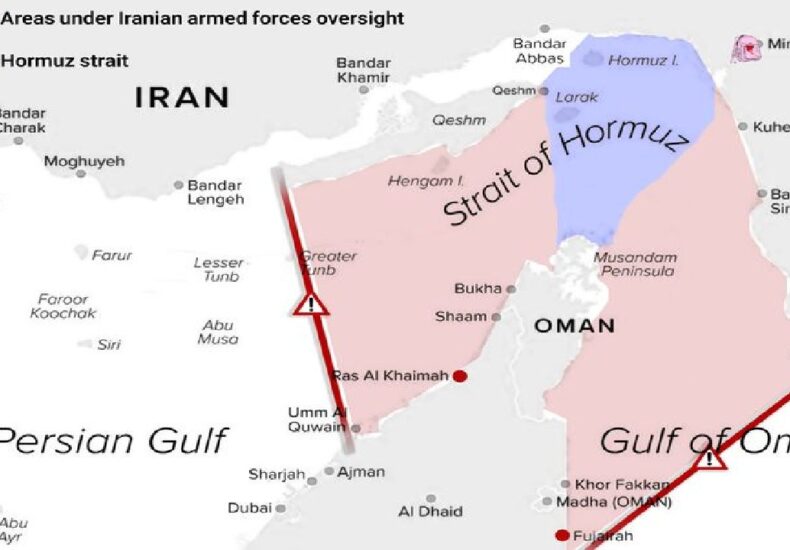
Iran officially announced the new maritime policy through the Persian Gulf Strait Authority, also known as PGSA. According to the statement released on May 20, 2026, vessels crossing certain parts of the Strait of Hormuz must now coordinate directly with Iranian authorities and obtain official permission before passing through the area. PGSA also published a digital map outlining the boundaries of the newly controlled maritime zone. The designated area reportedly stretches between several Iranian coastal points and waters near Fujairah and Umm al-Qaiwain in the UAE. Many political analysts interpreted the move as an effort by Tehran to strengthen its influence over Gulf shipping routes. However, critics argued that the policy could violate international navigation principles and increase tensions further. As reactions spread globally, military and maritime monitoring activities around the strait also intensified significantly during the past several days.
February 2026 Attacks Deepened Regional Conflict
Relations between Iran and the United Arab Emirates have remained fragile since the large-scale attacks involving the United States and Israel against Tehran in February 2026. After those strikes, Iran launched retaliatory missile and drone attacks targeting several locations across the Gulf region, including areas connected to the UAE. Tensions escalated even more after Tehran accused Abu Dhabi of supporting military operations against Iran. The UAE strongly denied the accusations and insisted that it supports regional stability rather than conflict escalation. Nevertheless, diplomatic relations continued deteriorating over the following months. Citizens throughout the Middle East have increasingly faced uncertainty as geopolitical rivalries become more aggressive and unpredictable. Beyond security concerns, regional businesses and trade sectors have also started experiencing economic pressure caused by instability. What initially began as a military confrontation has gradually transformed into a broader political and strategic conflict involving regional influence and maritime control.
Read More : UK and Australia Push Stricter Social Media Rules to
Freedom of Navigation Became the Main Concern
One of the biggest international concerns surrounding the crisis involves freedom of navigation through the Strait of Hormuz. Many governments believe no single country should control such a critical global shipping route independently. The United Arab Emirates has called for international cooperation to ensure that commercial vessels can continue crossing safely without political interference. Experts warned that even small disruptions in the strait could trigger major increases in global oil prices. Shipping companies and logistics operators have also started evaluating additional risks related to Gulf transportation routes. Some analysts believe the dispute extends far beyond territorial disagreements because it also reflects a wider battle for economic and geopolitical influence. As diplomatic discussions continue, global leaders remain concerned that the situation could spiral into a more dangerous regional crisis if tensions keep rising between both sides.
International Attention Continues Growing Across the Gulf
The latest developments in the Gulf region have pushed several world powers to monitor relations between Iran and the United Arab Emirates more closely. Western governments, international energy companies, and global organizations are carefully watching the situation because instability in the region can affect economies worldwide. Whenever the world’s major energy routes face uncertainty, even small political disputes can produce significant financial consequences. Many experts predict the confrontation may continue escalating in the coming weeks if both governments maintain aggressive public rhetoric. Meanwhile, international observers continue urging diplomatic solutions to prevent a larger conflict from emerging. Across financial markets, investors remain cautious while monitoring shipping activity near the Strait of Hormuz. Once again, the Gulf region has become the center of global geopolitical attention, reminding the world how fragile international stability can become when strategic waterways are threatened.