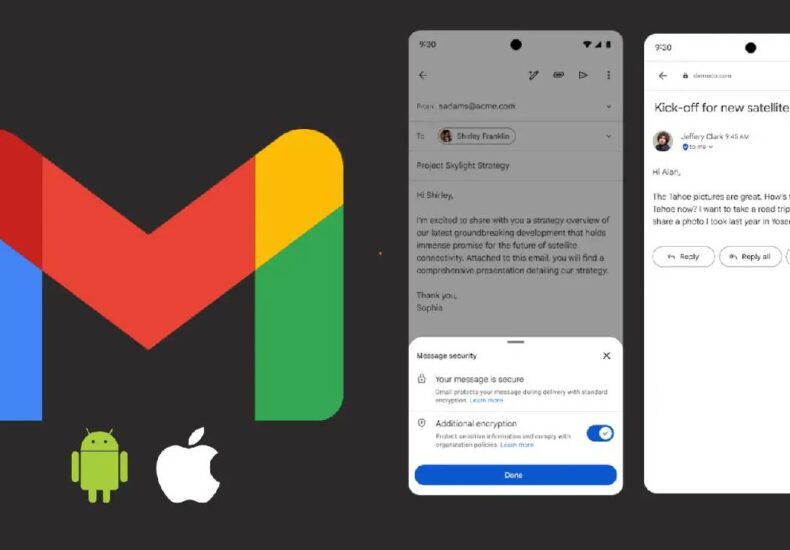
Google Introduces End-to-End Encryption in Gmail Mobile, Strengthening Privacy in the Digital Age
Fundacion Rapala – Google introduces end-to-end encryption in Gmail mobile, marking a major step toward stronger digital privacy. As communication shifts increasingly to smartphones, this update feels both timely and necessary. Now, users can send and read encrypted emails directly within the Gmail app on Android and iOS. Previously, this feature only existed on the web version, which limited flexibility. With this rollout, Google responds to the growing demand for secure communication on the go. Moreover, the integration feels seamless, allowing users to protect sensitive information without extra tools. For professionals and organizations, this change creates a safer space to exchange confidential data. At the same time, it shows how technology continues to adapt to modern work habits that rely heavily on mobile devices.
Limited Access Signals a Strategic Rollout
Although the feature sounds promising, Google has chosen a careful rollout strategy. Currently, only selected Google Workspace users, such as Enterprise Plus subscribers, can access it. This limitation suggests that Google wants to test performance and security before a wider release. In addition, organizations must enable encryption settings through their admin panel. This requirement ensures that only verified environments use the feature at this stage. While some users may feel left out, this approach reflects a focus on reliability and control. By prioritizing enterprise users first, Google targets sectors that handle sensitive data daily. As a result, the rollout feels more structured and intentional rather than rushed.
Read More : Women’s English League Disrupted by Long International
How End-to-End Encryption Works in Gmail
End-to-end encryption works by protecting emails from the moment users create them until they reach the recipient. In this system, only the sender and receiver can read the message. Not even Google can access the content. This design builds trust, especially for users who worry about data privacy. To activate the feature, users simply tap the lock icon when composing an email and choose additional encryption. Compared to older systems like S/MIME, this method feels much simpler. Users no longer need to manage certificates manually. Instead, the process becomes intuitive and quick. Because of this, even non-technical users can benefit from advanced security. Ultimately, this update removes barriers that once made encryption difficult to use.
Seamless Experience for Gmail and Non-Gmail Users
One of the most interesting aspects of this feature lies in its flexibility. Users can send encrypted emails not only to Gmail addresses but also to other email providers. For Gmail recipients, the message appears directly in the inbox as usual. However, non-Gmail users access the email through a secure browser environment. This approach ensures that encryption remains intact across different platforms. Furthermore, it removes the limitation that often exists in secure communication systems. Instead of restricting users, Google expands accessibility while maintaining protection. This balance between usability and security makes the feature more practical in real-world scenarios. As communication often happens across different services, this compatibility becomes a major advantage.
Read More :Barcelona Femení Dominates Real Madrid to Reach Champions
A Step Forward for Mobile Work Environments
The introduction of encryption on mobile devices reflects how work culture continues to evolve. Today, professionals rely heavily on smartphones to manage emails, documents, and meetings. Therefore, security must follow this shift. With this update, Gmail now offers consistent protection across both desktop and mobile platforms. This consistency matters, especially for organizations handling confidential information. Moreover, the feature supports remote work environments where employees access data from multiple locations. By simplifying encryption, Google enables faster and safer communication. As a result, teams can focus on productivity without worrying about security risks. This development highlights how technology adapts to modern work demands while maintaining user trust.
Google Strengthens Its Focus on Digital Security
Through this update, Google reinforces its commitment to improving digital security. Over the years, concerns about data privacy have grown significantly. Users now expect stronger protection from the platforms they trust. By implementing end-to-end encryption, Google responds directly to these expectations. In addition, the company simplifies a process that once felt complex and technical. This move not only enhances user confidence but also sets a higher standard for competitors. As more companies adopt similar features, the entire industry moves toward better security practices. In this sense, Google’s decision influences more than just Gmail users. It helps shape the future of secure digital communication.
The Future of Secure Communication Looks Promising
Looking ahead, the introduction of end-to-end encryption in Gmail mobile signals a promising future for secure communication. While the feature currently targets enterprise users, it may eventually reach a broader audience. If that happens, everyday users will gain access to stronger privacy tools without extra effort. This possibility could change how people think about email security. Instead of viewing encryption as optional, it may become a standard feature. Furthermore, as cyber threats continue to evolve, innovations like this will play a crucial role. For now, this update stands as an important milestone. It shows that even familiar tools like Gmail can evolve to meet new challenges and expectations.