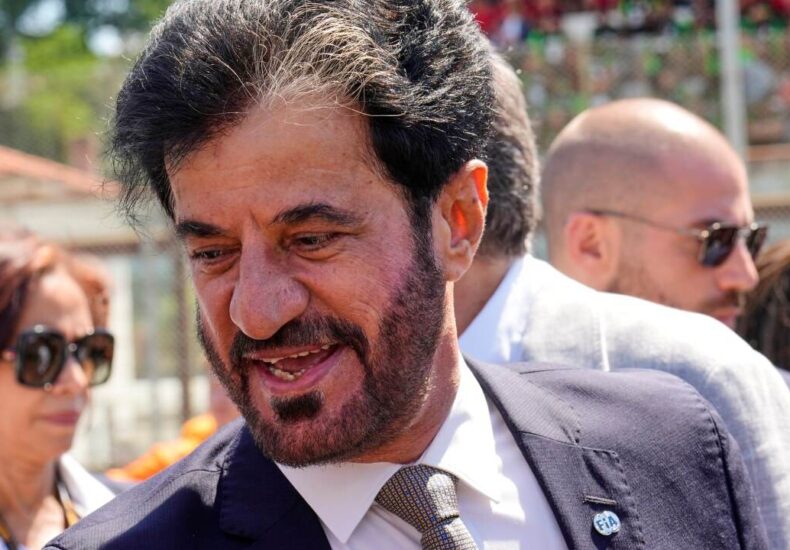
Ben Sulayem Re-Elected FIA President Unopposed, Controversy and Reform Shape His Second Term
Fundacion Rapala – Mohammed Ben Sulayem officially secured a second term as FIA president after running unopposed in the latest election. The vote, held during the FIA General Assembly in Tashkent, Uzbekistan, confirmed his leadership through December 2029. Although he was the only candidate on the ballot, the result still revealed subtle resistance. About 8.5 percent of eligible clubs chose not to support him, signaling quiet unease beneath the surface. Nevertheless, Ben Sulayem captured an overwhelming 91.51 percent of the vote. His re-election came less from open competition and more from procedural realities that shaped the contest. For supporters, the result ensures continuity during a period of institutional change. For critics, it raises questions about access, fairness, and representation inside motorsport’s most powerful governing body.
Election Rules That Quietly Closed the Door to Rivals
While the ballot showed only one name, the backstory revealed a more complex situation. FIA election rules require each presidential candidate to nominate vice-presidents from every global FIA region. This structure proved decisive. Only one eligible South American representative existed, and she was already part of Ben Sulayem’s team. As a result, potential challengers Tim Mayer and Laura Villars could not complete valid slates. Consequently, their campaigns stalled before reaching the voting stage. The rule, although longstanding, suddenly became pivotal. Critics argue it restricts competition, while defenders claim it preserves global balance. Either way, the regulation transformed what could have been a contested election into a procedural formality. This outcome has since fueled legal and ethical debates about governance access within the FIA.
“Read More : Philip Rivers Returns: Colts Turn to a Familiar Leader in a Season of Crisis”
Legal Challenges Cast a Shadow Over the Mandate
Despite the decisive vote, legal questions remain unresolved. Swiss candidate Laura Villars has filed a legal challenge in France, arguing the election rules unfairly limited her candidacy. A court hearing scheduled for February may determine whether procedural fairness was compromised. At the same time, the FIA faces additional legal pressure connected to the long-running “Crashgate” scandal. Former F1 driver Felipe Massa is pursuing damages related to the controversial 2008 Singapore Grand Prix. Together, these cases form a legal backdrop that complicates Ben Sulayem’s renewed mandate. While none currently block his presidency, they highlight ongoing institutional vulnerability. For observers, these legal fronts underscore that leadership continuity does not automatically translate into organizational calm.
A First Term Defined by Reform and Friction
Ben Sulayem’s first four years in office delivered sweeping structural changes, but not without turbulence. Several senior FIA officials departed following internal disputes, triggering criticism about leadership style and decision-making. Detractors accused the president of centralizing power and weakening governance independence. However, supporters credit him with restoring financial stability after years of strain. According to FIA statements, his tenure strengthened budget discipline, modernized audit systems, and improved transparency. The contrast between reform and resistance defined his leadership narrative. While operational efficiency improved, trust within parts of the organization eroded. That dual legacy now follows him into his second term, shaping expectations and scrutiny moving forward.
“Read More :‘Just Put On a Helmet’ Ollie Pope’s Straightforward Reminder to England Squad”
FIA Defends Transformation and Financial Recovery
In its official statement, the FIA portrayed Ben Sulayem’s first term as transformative. The organization emphasized improved governance, restored financial health, and stronger accountability standards. Officials highlighted tighter budget controls and enhanced external audits as cornerstones of reform. Moreover,