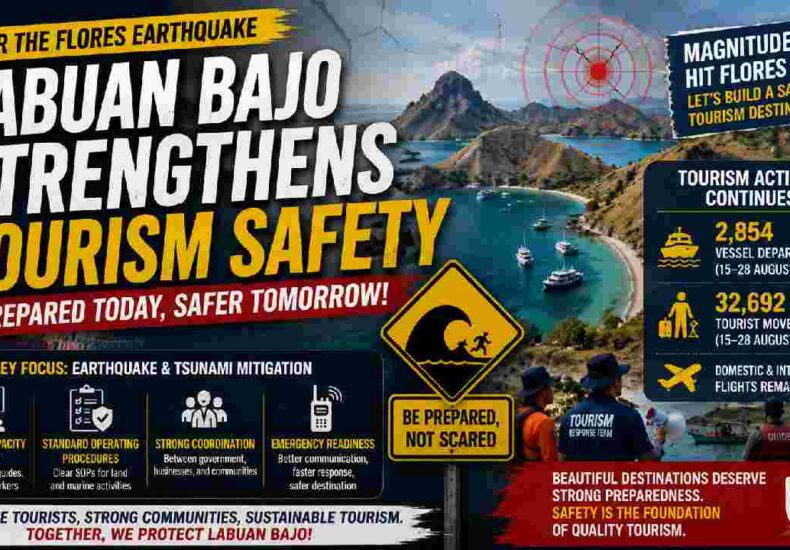
After the Flores Earthquake, Labuan Bajo Strengthens Tourism Safety and Tsunami Preparedness
Fundacion Rapala – The Flores Earthquake Tourism Safety discussion has gained urgency after a magnitude 7.7 earthquake struck Flores on August 15, 2026. In Labuan Bajo, tourism businesses and industry associations are now calling for stronger earthquake and tsunami preparedness. The issue matters because the region welcomes travelers from Indonesia and abroad throughout the year. During a meeting with Tourism Minister Widiyanti Putri, local stakeholders emphasized that safety must remain the foundation of quality tourism. They highlighted training, clear emergency procedures, and stronger coordination between authorities and tourism operators. The conversation also reflects a broader lesson for destinations located in disaster-prone areas. Beautiful scenery may attract visitors, but preparedness helps protect them when conditions suddenly change. For Labuan Bajo, strengthening safety systems is therefore not only about responding to one earthquake. It is also about building long-term confidence in a destination known worldwide for its remarkable natural attractions.
Tourism Workers Need Practical Emergency Training
Tourism workers often become the first people travelers turn to during an emergency. Therefore, local associations are pushing for stronger earthquake and tsunami mitigation training across Labuan Bajo. The proposed training would involve boat captains, crew members, tour guides, operators, and other workers who interact directly with visitors. Practical knowledge can make a major difference when every minute matters. Workers need to understand evacuation routes, communication procedures, safe gathering areas, and appropriate responses during offshore emergencies. At the same time, training should not remain limited to written guidelines. Regular simulations can help workers respond more calmly when a real emergency occurs. This approach also creates a shared safety culture across the tourism industry. When guides, hotels, boat operators, and authorities understand their roles, coordination becomes faster. For travelers, that preparation can provide an important sense of security while exploring a destination surrounded by both mountains and sea.
Read More : Nepal Flood Disaster Pushes
Marine Tourism Faces Its Own Safety Challenges
Marine tourism is one of Labuan Bajo’s strongest attractions, but its popularity also creates unique safety responsibilities. Visitors frequently travel by boat to explore islands, beaches, snorkeling areas, and spectacular landscapes around the region. An earthquake or tsunami warning can quickly change conditions both on land and at sea. For that reason, tourism authorities are emphasizing stronger skills among workers, consistent safety procedures, and better emergency readiness. Boat crews need clear information about where to go when warnings are issued. Tour operators must also know how to communicate instructions without creating unnecessary panic. Meanwhile, visitors should receive simple safety information before departures. These measures may appear basic, yet consistency is what makes them effective. Labuan Bajo’s tourism appeal depends heavily on the ocean, so maritime safety cannot become an afterthought. Strong preparedness can protect travelers while helping businesses maintain public trust during periods of heightened natural-disaster awareness.
Government Programs Aim to Improve Tourism Competence
Indonesia’s Tourism Ministry has already introduced programs designed to strengthen professional skills in the tourism sector throughout 2026. These efforts include workforce certification for guiding services and competency-based training covering water tourism, mountain activities, and snorkeling. Such programs become especially relevant after the Flores earthquake because emergency preparedness depends heavily on trained people. Equipment and written procedures are valuable, but workers must also understand how to use them under pressure. Furthermore, certification can encourage more consistent standards across different tourism businesses. This matters in destinations where travelers may move between hotels, boats, guides, and outdoor operators within a single trip. Stronger professional standards can create a connected safety network rather than isolated procedures. For Labuan Bajo, investment in human resources could therefore provide benefits beyond disaster response. Better-trained workers may improve service quality, visitor confidence, and the destination’s overall resilience in the years ahead.
Read More : Saudi Border Guards Seize 24
Labuan Bajo Tourism Continues Despite the Earthquake
Despite concerns following the earthquake, tourism activity in Labuan Bajo continued during the second half of August. According to the local government data cited in the report, 2,854 vessel departures and 32,692 tourist movements were recorded between August 15 and August 28, 2026. Domestic and international air traffic was also reported to remain relatively stable. These figures offer an important perspective because disaster preparedness does not automatically mean tourism must stop completely. Instead, destinations need accurate assessments and clear communication before deciding how activities should proceed. Manggarai Barat Regent Edistasius Endi said the earthquake had not significantly disrupted tourism activity across Labuan Bajo overall. Still, continued operations should not reduce attention to safety. The opposite is true. When thousands of visitors remain active in a destination, effective emergency procedures become even more important. Preparedness helps tourism continue responsibly while keeping potential risks firmly in view.
Building Traveler Confidence Requires More Than Promotion
For destinations such as Labuan Bajo, visitor confidence grows from more than beautiful photographs and promotional campaigns. Travelers also want to know that authorities and tourism businesses are prepared for unexpected situations. The Flores earthquake offers an opportunity to strengthen that confidence through visible safety improvements. Hotels can provide evacuation information, guides can explain emergency procedures, and boat operators can conduct routine safety checks. Meanwhile, authorities can improve communication channels so warnings reach businesses and travelers quickly. These measures do not need to create fear. Instead, they can show that the destination understands its natural environment and takes visitor welfare seriously. Clear information is especially important after a major earthquake because rumors can spread quickly online. By communicating verified conditions and practical guidance, tourism stakeholders can reduce uncertainty. In the long term, a reputation for responsible safety management may become just as valuable as Labuan Bajo’s extraordinary scenery.
A Safer Future for Tourism Across Flores
The lessons emerging from Labuan Bajo can also support tourism communities across Flores. Earthquakes and tsunami risks require cooperation that extends beyond individual hotels, guides, or tour operators. Local governments, emergency agencies, transportation providers, tourism businesses, and communities need systems that work together. Regular drills, updated evacuation maps, reliable communication, and accessible visitor information can strengthen that network. Most importantly, preparedness should become routine rather than something discussed only after a disaster. Labuan Bajo remains a major gateway to some of eastern Indonesia’s most celebrated landscapes, and its tourism industry continues to welcome visitors. Protecting that experience requires equal attention to hospitality and safety. The recent earthquake has reminded stakeholders that resilience is built before an emergency happens. By turning concern into practical improvements, Flores can strengthen tourism while giving visitors greater confidence to explore its islands, waters, villages, and dramatic natural landscapes responsibly.