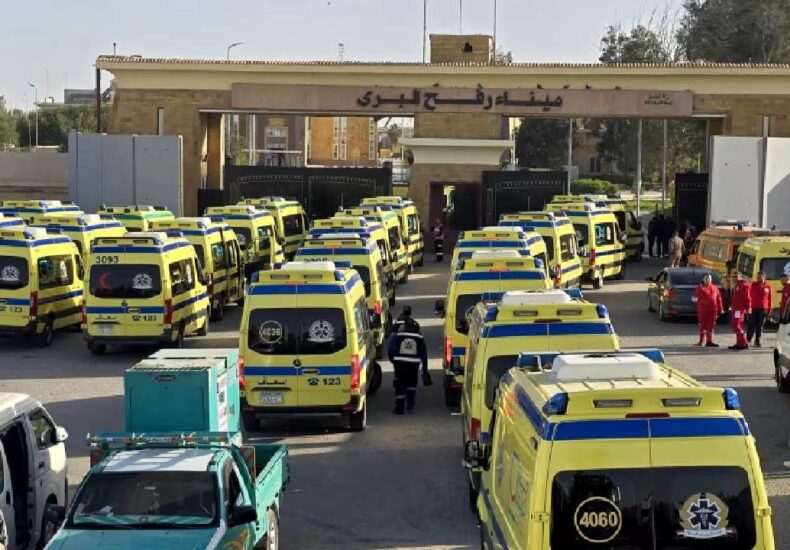
Rafah Reopens: A Fragile Gateway Between Gaza and Egypt After Nearly Two Years
Fundacion Rapala – After nearly two years of closure, the Rafah border crossing partially reopened on Monday, marking a rare moment of movement for Gaza’s isolated population. According to Israeli security officials, the reopening allows a limited number of Palestinians to exit and enter the enclave for the first time since Israel closed the crossing in mid-2024. While modest in scale, the decision carries deep emotional weight. For many families, Rafah has long symbolized the only escape from war, illness, and uncertainty. Now, even a small reopening feels monumental. Nevertheless, the process remains tightly controlled. Only a handful of people can pass each day, underscoring how fragile the situation remains. Although the crossing does not yet permit humanitarian aid or commercial goods, its reopening signals a tentative shift. In a region defined by closed doors, even a narrow opening can reshape hope.
European Union Oversees a Highly Restricted Operation
The partial reopening of Rafah is being overseen by the European Union as part of the first phase of a US-brokered ceasefire agreement that began in mid-October. This arrangement reflects a delicate balance of international involvement and regional tension. Preparations involved coordination between the EU, Egypt, and Israeli authorities, highlighting how complex even limited access can be. During the initial days, Egypt’s state-affiliated media reported that only 50 people per day would be allowed to cross in each direction. Although earlier reports suggested higher numbers, reality has proven more constrained. This gap between expectation and implementation has frustrated many Palestinians. Still, the EU’s presence offers a degree of oversight and legitimacy. While the crossing operates under strict limits, its reopening demonstrates cautious international engagement in managing Gaza’s most sensitive gateway.
“Read More : Nationwide Anti-ICE Protests Erupt as Minnesota Clashes with Trump Administration”
Patients and Families Carry Hope Through the Crossing
For Gaza residents, the reopening of Rafah is not a political event but a matter of survival. At Al-Aqsa Martyrs’ Hospital in Deir al-Balah, patients like Ibrahim Al-Batran prepared bags in quiet urgency. As a kidney dialysis patient, he knows that local hospitals can provide only minimal care. His words reflect the desperation shared by thousands. According to Gaza’s Ministry of Health, more than 20,000 patients are waiting for permission to seek treatment abroad, including hundreds in life-threatening condition. Nearly 1,300 have already died while waiting. Against this backdrop, Rafah’s reopening feels painfully overdue. Even so, only a fraction of patients will be able to leave. For families watching loved ones fade while paperwork drags on, hope remains fragile but fiercely held.
Cost, Bureaucracy, and Inequality Still Block Access
Despite the reopening, most Palestinians cannot realistically pass through Rafah. Long-standing barriers remain firmly in place. High costs, complex security checks, and lengthy bureaucracy sharply limit access. Before the crossing closed, some travelers reported paying thousands of dollars to secure passage. For families already impoverished by war, such sums are impossible. As a result, Rafah risks becoming a symbol of inequality rather than relief. While the crossing technically operates, access depends on financial means and administrative approval. This reality tempers optimism among Gaza residents. The reopening offers possibility, yet it also exposes how uneven that possibility is. Without reforms to cost and process, Rafah may remain open in name while closed in practice for most who need it most.
“Read More : Trump Meets Zelensky at Davos to Discuss Ukraine War and Peace Efforts”
Ceasefire Conditions Shape the Limited Reopening
The Rafah reopening stems directly from the first phase of a 20-point ceasefire agreement brokered by the United States. However, Israel delayed implementation until all hostages were returned, both living and deceased. The return of Ran Gvili last week cleared the final obstacle. Even then, Israeli Prime Minister Benjamin Netanyahu emphasized that the reopening would remain limited, excluding humanitarian aid and commercial goods. This decision reflects ongoing security concerns but also highlights the political calculus shaping humanitarian access. While the ceasefire has reduced immediate violence, its benefits arrive slowly and unevenly. Rafah’s partial reopening concludes the agreement’s first phase, yet its restrictions reveal how fragile peace remains when trust is scarce and conditions tightly enforced.
Rafah as a Symbol of Survival and Unfinished Relief
For many Palestinians, Rafah is more than a crossing point. It represents survival, dignity, and connection to the outside world. Ali Shaath, who leads the Palestinian technocratic committee expected to oversee Gaza’s administration, described the reopening as both a lifeline and a symbol of opportunity. That symbolism resonates deeply. However, symbolism alone cannot treat patients or reunite families at scale. The second phase of the ceasefire, announced recently by the United States, now carries enormous expectations. Whether Rafah evolves into a fully functioning corridor or remains narrowly open will define its legacy. For now, each ambulance waiting at the border embodies both relief and restraint. Rafah stands open, but its future impact remains uncertain.