US Strike in Venezuela Sends Shockwaves Through Global Oil and Gas Markets
Fundacion Rapala – The US strike on Caracas marked a dramatic turning point for Venezuela and the global energy landscape. The capture and removal of President Nicolás Maduro ended decades of tension in a single, shocking moment. Overnight, uncertainty replaced a rigid political order. For Venezuelans, the event triggered fear, hope, and confusion all at once. For energy markets, it raised urgent questions about oil supply, pricing stability, and future access to the world’s largest proven oil reserves. Venezuela holds an estimated 303 billion barrels of crude, a figure that alone commands global attention. As news spread, traders, analysts, and governments began watching closely. While oil markets were closed at the time, expectations started forming rapidly. The real concern now centers on what comes next politically and how quickly power transitions will unfold in a country whose oil sector has suffered years of neglect.
Why Oil Prices Didn’t Spike Immediately
Despite the scale of the strike, oil prices did not surge instantly. The reason lies in Venezuela’s weakened production capacity. Although the country sits atop enormous reserves, it currently produces only about one million barrels per day. That figure represents less than one percent of global output. Over the years, sanctions, underinvestment, and infrastructure decay have crippled Venezuela’s oil industry. As a result, even a complete supply disruption would have limited short-term impact. At the same time, global markets already face oversupply concerns. OPEC has increased output, while global demand has softened due to inflation and economic pressure. These factors help absorb potential shocks. Psychologically, the event may add tension, but structurally, the market remains well supplied. In short, the scale of Venezuela’s reserves matters more for the future than for immediate price movement.
“Read More : Netanyahu and Trump: A Familiar Appeal in a Relationship Tested by Power and Caution”
The Fragile State of Venezuela’s Oil Industry
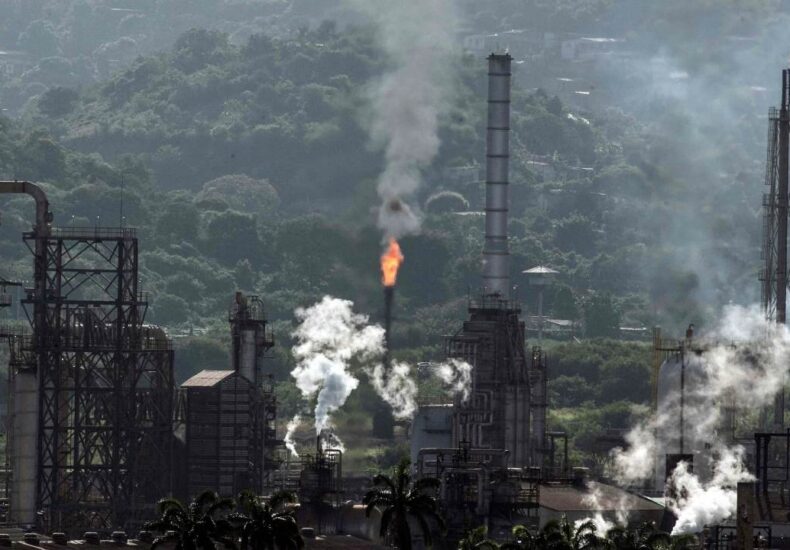
Venezuela’s oil story is one of lost potential. Once a powerhouse producer, the country pumped more than 3.5 million barrels per day before socialist policies reshaped the industry. Since then, production has fallen sharply. Aging refineries, failing pipelines, and a shortage of skilled labor have taken their toll. Political interference replaced technical management, while profits were diverted away from maintenance. International sanctions worsened the decline, but mismanagement played an equally destructive role. Today, much of the infrastructure operates below safe capacity. Restarting or expanding production would require years of investment and technical expertise. This reality explains why markets remain calm. Oil trapped underground cannot influence prices until it flows. For now, Venezuela’s reserves represent potential energy rather than active supply.
A Power Vacuum With Global Consequences
Maduro’s removal creates a political vacuum that could shape oil markets for years. The next 24 to 48 hours remain critical. If the military backs opposition leaders, stability could return quickly. That scenario would boost investor confidence and calm markets. However, prolonged unrest or civil conflict would create the opposite effect. The US recognizes exiled leader Edmundo González as Venezuela’s legitimate president, supported by reformist voices like María Corina Machado. Yet transitions rarely move smoothly. Investors fear uncertainty more than bad news. A stable, market-friendly government could reopen Venezuela to international energy firms. Conversely, continued instability would delay recovery and keep production low. The oil beneath Venezuelan soil waits patiently, but politics will decide how soon the world can access it.
“Read More : Slow Epstein Files Disclosures Ignite Fresh Political Turmoil Around Trump”
Why Venezuelan Oil Still Matters Globally
Not all oil is created equal, and Venezuela’s crude holds special importance. Its heavy, sour oil requires advanced refining, yet it plays a crucial role in producing diesel, asphalt, and industrial fuels. Diesel shortages already affect global logistics and manufacturing. Ironically, many US refineries were built specifically to process Venezuelan crude. These facilities operate more efficiently with heavy oil than with lighter American blends. As a result, Venezuela could become a strategic energy partner again. Its proximity to the US also reduces transportation costs. However, unlocking this advantage depends on policy shifts and investment. Without reform, the oil remains economically stranded. With reform, it could reshape supply chains across the Western Hemisphere.
A Potential Turning Point for Energy Markets
If Venezuela opens its oil sector to international companies, the impact could be transformative. US and European firms possess the technology needed to revive production safely and efficiently. A cooperative government could attract billions in investment, rebuild infrastructure, and gradually raise output. Over time, increased Venezuelan supply would help stabilize global fuel prices and ease diesel shortages. For the US, access to nearby heavy crude would strengthen energy security. For global markets, it would add a reliable source outside the Middle East. Still, optimism must remain cautious. Rebuilding an industry takes time, trust, and political will. The strike may mark the end of one era, but the beginning of another depends entirely on what Venezuela becomes next.