Trump Administration’s Latest Moves: A Warning to Iran and Rubio’s Testimony on Venezuela
Fundacion Rapala – President Donald Trump has escalated tensions with Iran by warning them to negotiate an “equitable” nuclear deal. If Iran refuses, Trump suggests that the U.S. could strike again. His warning comes as the U.S. military strengthens its presence in the region. The USS Abraham Lincoln carrier strike group has moved closer to Iran, signaling the U.S.’s readiness for further action. Trump posted on social media, stating, “A massive Armada is heading to Iran,” emphasizing the power and intent behind the U.S. military’s move.
U.S. Forces Conduct Air Exercise in the Middle East
Along with the warning, U.S. forces are preparing for a multi-day air exercise in the Middle East. The exercise aims to showcase American military strength. The USS Abraham Lincoln plays a central role in this operation. Trump has made it clear that these actions are not intended as acts of war. Instead, they serve to remind Iran of the U.S.’s military capabilities, as tensions in the region continue to rise.
“Read More : Thailand and Cambodia Sign Truce to End Fierce Border Clashes”
Rubio’s First Public Testimony on Venezuela
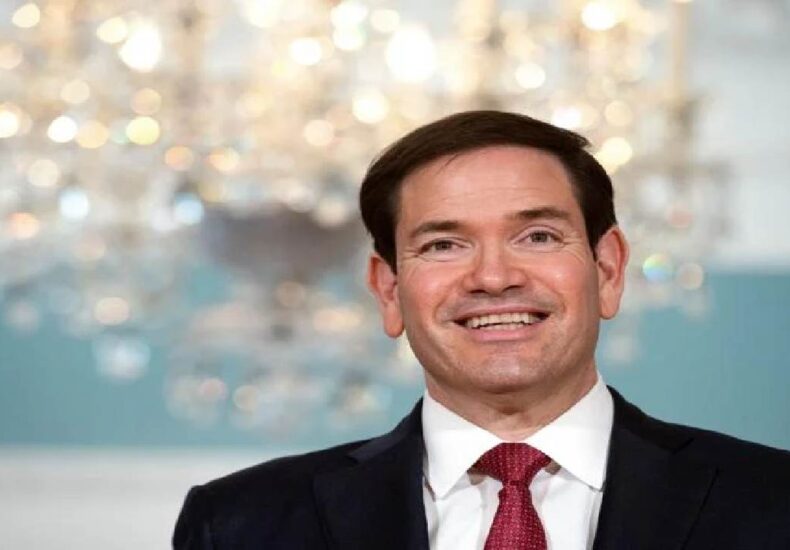
U.S. Secretary of State Marco Rubio is making headlines with his public testimony before the Senate Foreign Relations Committee. This marks his first appearance since the U.S. military operation that led to the ousting of Venezuelan President Nicolás Maduro. Rubio’s strong stance on Venezuela is well known. He has now addressed the Senate, warning that the U.S. will use force if Venezuela’s interim government fails to cooperate with American efforts to stabilize the country.
Rubio Threatens Use of Force in Venezuela
In his testimony, Rubio made a bold statement. He declared that the U.S. is prepared to use force to ensure Venezuela’s interim government complies with U.S. goals. He emphasized that the U.S. is watching the actions of the interim government closely. “If other methods fail, we are ready to act,” Rubio said. His statement comes as the Trump administration faces growing scrutiny over its actions in Venezuela and the broader implications for U.S. foreign policy.
Rubio Addresses Maduro’s Allies
Rubio also aimed his remarks at key figures in Maduro’s government. He specifically mentioned Delcy Rodríguez, Venezuela’s Vice President, suggesting that her self-interest might align with U.S. objectives. Rubio highlighted that cooperation with the U.S. could lead to a peaceful transition for Venezuela. His comments reflect a delicate balancing act: pushing for regime change while avoiding the appearance of military intervention.
Congress Questions U.S. Actions in Venezuela
The Trump administration has faced criticism for not consulting Congress before taking military action in Venezuela. Rubio addressed this issue, insisting that the U.S. military presence was not an act of war but a law enforcement operation. However, many lawmakers both Democrats and Republicans have expressed concerns. Efforts to restrict the president’s power through a war powers resolution narrowly failed in Congress, which has led to ongoing debates over the administration’s foreign policy decisions.
The Bigger Picture: U.S. Foreign Policy in the Middle East and South America
These developments in both the Middle East and South America illustrate the Trump administration’s strategic priorities. In Iran, the focus is on limiting nuclear capabilities and showing military strength. In Venezuela, the administration is working to overthrow Nicolás Maduro’s government and stabilize the country. As Trump and Rubio continue to lead these efforts, their actions will shape U.S. foreign policy for years to come.