Vladimir Putin Holds Firm on Ukraine as Peace Push Intensifies from Washington
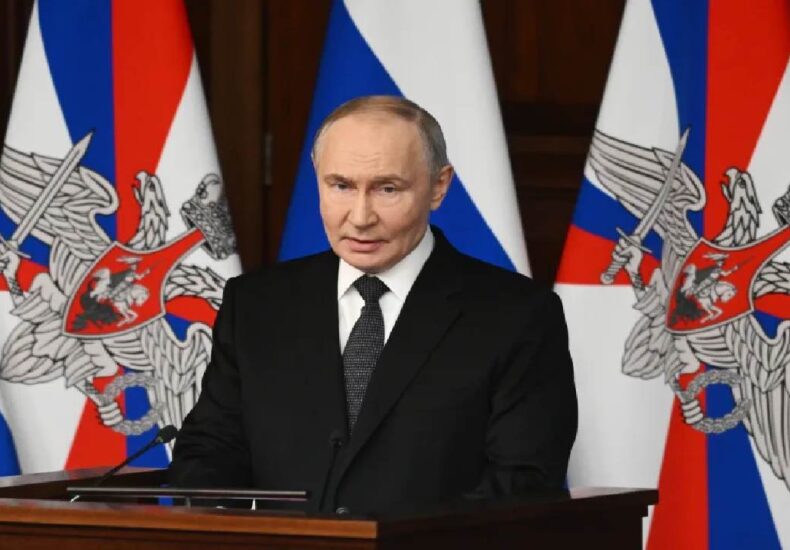
Fundacion Rapala – In a moment charged with global tension, Vladimir Putin stepped onto the stage of Russia’s annual Defense Ministry meeting with a message that left little room for optimism. As diplomatic channels buzzed with renewed calls for peace especially from Washington Putin chose defiance over compromise. His words echoed across capitals, signaling that Russia would not soften its stance on Ukraine’s territorial concessions. For many observers, the speech felt less like a negotiation opening and more like a line drawn in stone. Putin framed his position as a defense of “historical lands,” a phrase that has become emotionally loaded and deeply unsettling for Ukraine and Europe alike. While he nodded toward diplomacy, the underlying tone suggested readiness for prolonged confrontation. In a world eager for de-escalation, Moscow’s message landed heavily, reinforcing fears that the road to peace remains long, uncertain, and deeply contested.
Diplomacy Offered, Force Still on the Table
Putin’s rhetoric balanced carefully between the language of diplomacy and the threat of force. He spoke of preferring negotiations to address what he called the “root causes” of the conflict, yet quickly pivoted to a warning. If Ukraine and its allies refused to engage on Russia’s terms, Moscow would act militarily. This duality reflects a familiar Kremlin strategy: extend the appearance of dialogue while maintaining pressure through strength. For Ukrainians, such statements reopen wounds rather than heal them. The insistence on territorial concessions strikes at the heart of sovereignty, making compromise politically and emotionally impossible for Kyiv. Meanwhile, international mediators face a shrinking space to maneuver. Each mention of military inevitability hardens positions further, pushing diplomacy into an increasingly narrow corridor where trust feels fragile and time feels relentlessly short.
“Read More : Defense Stocks Surge as Germany Prepares Historic $60 Billion Military Spending Plan”
The Territorial Question That Won’t Fade
At the center of the stalemate lies territory specifically eastern Ukraine’s Donbas region. Russia claims it as historically its own, despite lacking full control even after years of fighting. Analysts estimate that, at the current pace, Moscow would need years to occupy the entire region. This reality adds a layer of tension to peace talks, as demands outpace facts on the ground. Ukraine, for its part, remains unwavering. President Volodymyr Zelensky has made clear that Kyiv will not recognize occupied territories as Russian, legally or otherwise. For Ukrainians, this stance is not just policy but principle. Land represents identity, memory, and sacrifice. Any suggestion of surrender feels like erasing those experiences. The territorial debate, therefore, is not merely strategic it is profoundly human, making resolution painfully elusive.
Washington’s Optimism Meets European Caution
Across the Atlantic, the tone shifts noticeably. US President Donald Trump has expressed growing confidence that a peace deal is within reach, projecting optimism that contrasts sharply with European restraint. Washington appears eager to broker an agreement, emphasizing momentum and possibility. Europe, however, moves more cautiously. Leaders across the continent continue to press for strong security guarantees for Ukraine, wary of any settlement that might leave the country vulnerable to future aggression. Putin highlighted this divide in his speech, suggesting Russia could engage meaningfully with the US but not with Europe’s current leadership. This split complicates diplomacy. When allies approach peace with different priorities and fears, unity frays. The result is a negotiation landscape shaped as much by internal disagreements as by the battlefield itself.
“Read More : Warren Buffett, the Quiet Zen Master of Modern Capitalism”
Europe’s Security Reckoning Grows Louder
Putin’s remarks arrive as Europe confronts a broader reckoning about its own security. In Brussels, leaders prepare to debate bold measures, including using frozen Russian assets or borrowing funds to support Ukraine. European Commission President Ursula von der Leyen has framed the moment starkly, calling support for Ukraine the most important act of European defense today. Her words reflect a growing realization: Europe can no longer rely solely on external guarantees. The war has forced the continent to reconsider its preparedness, resilience, and responsibility. Funding Ukraine is no longer viewed as charity but as self-defense. This shift carries emotional weight, born from fear, solidarity, and a desire to protect a shared future from repeating the mistakes of the past.
A Future Clouded by Resolve and Uncertainty
As global leaders push and pull toward different visions of peace, one truth stands out: resolution will not come easily. Putin’s refusal to compromise hardens the landscape, even as diplomatic efforts intensify. Ukraine remains resolute, Europe remains cautious, and the United States remains hopeful. Between these positions lies a fragile space where outcomes remain uncertain. The war has become more than a geopolitical struggle; it is a test of endurance, values, and collective will. For millions affected directly and indirectly, each statement from leaders carries emotional consequences. Hope flickers, but so does fear. As winter diplomacy unfolds, the world watches closely, aware that every word spoken today may shape the security and humanity of tomorrow.