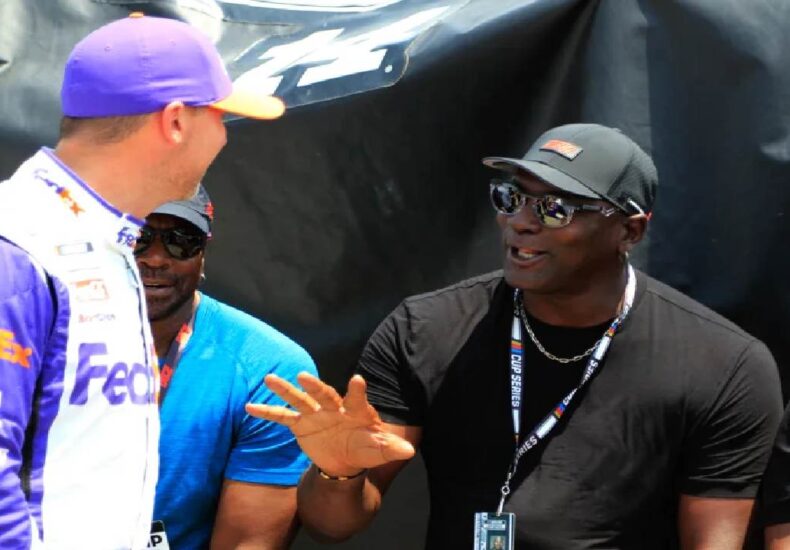
Michael Jordan Takes the Stand: Inside the NASCAR Antitrust Battle That Could Reshape the Sport
Fundacion Rapala – When Michael Jordan entered the federal courthouse in Charlotte, the air shifted. Fans, journalists, and legal observers packed the room, waiting to see what the six-time NBA champion would say about a sport he has loved since childhood. Jordan explained that joining the antitrust lawsuit wasn’t a strategic business move it was a moral obligation. He saw veteran team owners struggle for years under a system they felt was unfair, and he refused to remain silent. His calm voice carried a firm message: NASCAR needed to change. By bringing 23XI Racing into the fight, Jordan hoped to push the sport toward a more transparent and collaborative model one that respected both the teams risking their lives and the legacy of racing itself.
A Courtroom That Felt the Weight of His Words
Jordan testified for nearly an hour, and every moment seemed to underline how unusual this case truly is. Judges cracked lighthearted jokes to ease the tension, lawyers scrambled for their notes, and the audience leaned in as Jordan described why NASCAR’s charter extension proposal felt like an ultimatum rather than a partnership. He explained that NASCAR refused to discuss permanent charters, resisted compromise, and demanded signatures within six hours. Jordan stressed that agreeing to the deal would have stripped teams of their right to sue a condition he saw as a red flag for antitrust violations. His testimony painted a picture of a sport dominated by one entity, leaving teams with little bargaining power.
“Read More : ‘Just Put On a Helmet’ Ollie Pope’s Straightforward Reminder to England Squad”
The Human Cost Behind the Charter Dispute
Just before Jordan took the stand, the courtroom heard emotional testimony from Heather Gibbs, daughter-in-law of racing legend Joe Gibbs. She recounted the chaotic six-hour window in which NASCAR forced teams to sign the new charter agreement or lose their guaranteed spots in races. Her voice shook as she described calling it “a gun to your head.” For her family, the stakes were deeply personal. Joe Gibbs had already endured unimaginable loss with the deaths of his sons, J.D. and Coy. The NASCAR team he built became their family legacy, and without permanent charters, that legacy felt fragile. Her testimony showed the lawsuit wasn’t about greed it was about survival and stability for the people who built the sport.
Why Jordan Believes NASCAR’s Model Is Broken
Jordan didn’t mince words when comparing NASCAR’s revenue structure to the NBA’s. In basketball, players receive nearly half of league revenue; in NASCAR, teams receive only a fraction of the sport’s earnings. He argued that teams shoulder enormous expenses while drivers face life-threatening risks every weekend, yet the financial model doesn’t reflect that reality. Jordan revealed he personally invested $35–40 million into 23XI Racing and still struggles to see long-term security under NASCAR’s current structure. He emphasized that growth and loss should be shared responsibilities, not burdens carried solely by the teams. For him, signing a deal that didn’t acknowledge that principle was simply unacceptable.
“Read More : Chauncey Billups Pleads Not Guilty in Federal Poker Scheme Case”
A Business Deal That Sparked a Rebellion
The turning point came in September 2024, when NASCAR delivered a 112-page extension document and gave team owners six hours to sign. Jordan, together with co-owner Denny Hamlin and Front Row Motorsports, refused. Instead of accepting terms they believed were unfair, they filed an antitrust lawsuit alleging NASCAR abused its monopoly power. Jordan told the jury that he wanted permanent charters assets teams could rely on, pass down, and protect. Yet NASCAR wouldn’t even discuss the possibility. To Jordan, that refusal signaled a deeper problem: a sport designed to benefit the governing body while leaving teams financially vulnerable. Filing the lawsuit, he said, was the only way forward.
Families, Legacies, and a Sport at a Breaking Point
Heather Gibbs’s testimony added heartbreaking context to the conflict. She described leaving her 84-year-old father-in-law sitting in the dark, overwhelmed by the pressure of signing away their team’s security. Her voice broke as she recalled hearing his blood sugar monitor beep while he pleaded with NASCAR chairman Jim France for reconsideration only to be dismissed. For JGR, a team with 450 employees and decades of history, losing a charter would mean losing everything they built. Her words reminded the courtroom that behind every car on the track lies a family, a workforce, and a legacy. And without permanent charters, all of it hangs in uncertainty.
The Trial That Could Redefine NASCAR’s Future
As Jordan left the courthouse, the significance of his testimony lingered. His presence amplified the lawsuit’s importance, showing that even the world’s most iconic athlete felt compelled to speak out. The antitrust case now challenges NASCAR to justify a business model many say restricts competition and threatens the survival of teams. If Jordan and the plaintiffs prevail, the ruling could reshape the economics of American motorsports. For now, the racing world watches closely aware that the outcome of this trial could determine whether teams gain long-term security or continue fighting uphill battles in a system that refuses to change.