France and Canada Open Consulates in Greenland as Trump’s Pressure Returns
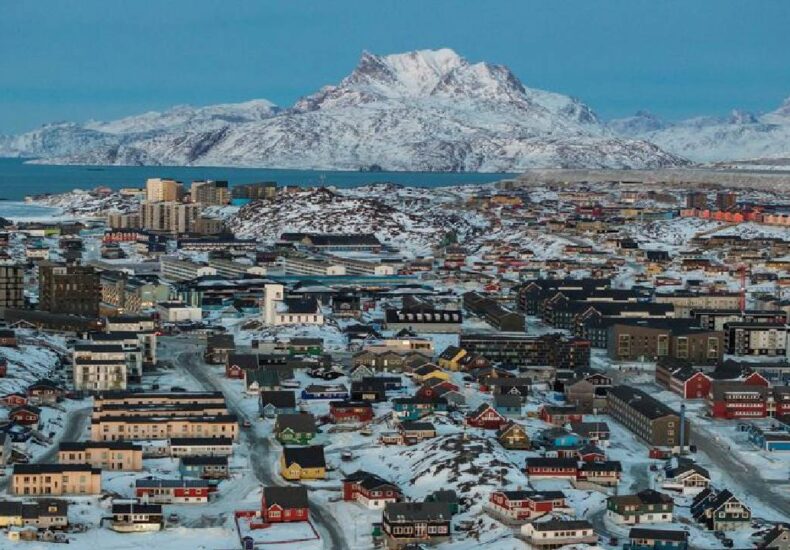
Fundacion Rapala – France and Canada opened new consulates in Nuuk, Greenland’s capital, on Friday, and the timing immediately drew global attention. Although officials avoided framing it as a confrontation, the message still felt clear: Denmark is not standing alone. At the same time, US President Donald Trump has revived demands to acquire Greenland, an autonomous Arctic territory under the Kingdom of Denmark. As a result, what looks like routine diplomacy suddenly carries strategic weight. In my view, this is the kind of moment where symbols matter, even when leaders insist they do not. The flags, the speeches, and the formal appointments all send a signal of presence, unity, and readiness in a region that keeps growing more valuable.
France Frames the Consulate as Friendship, Not a Warning
Jean-Noel Poirier, appointed as France’s new Consul General in Nuuk, carefully chose his words when speaking to reporters. Rather than presenting his role as a reaction to Washington, he described it as a message of friendship to Greenland and Denmark. Even so, he also stressed solidarity, which is the part that resonates most. He explained that when a friend needs support, you look back and see who is truly there. France, he implied, wants to be visibly present. Meanwhile, French Ambassador to Denmark Christophe Parisot added that the consulate is not only symbolic. Instead, it is something “very concrete,” meant to strengthen cooperation between allies. Therefore, France is building a real, working footprint, not just making statements.
“Read More : The Epstein Storm Could Topple a World Leader But It’s Not Trump”
Canada Brings Arctic History and a Maritime Border Into the Spotlight
Canada’s opening carried a slightly different tone, because its ties to Greenland are not only political but also geographic. Canadian Foreign Affairs Minister Anita Anand and Governor General Mary Simon arrived in Nuuk for the ceremony, raising the flag as the consulate officially began operations. Notably, Canada emphasized that it shares the world’s longest maritime border with Greenland, along with centuries of Arctic connections. That detail matters, because it turns the consulate into more than a diplomatic “gesture.” It becomes a practical tool for long-term cooperation in the far north. In addition, Canada’s government described the consulate as a way to strengthen partnerships with Greenland and the Kingdom of Denmark. From a strategic view, Canada is reinforcing its Arctic identity in real time.
Why Greenland Has Become a High-Stakes Territory Again
Greenland has always been large on the map, but now it feels even larger in world politics. Its Arctic location gives it military significance, and its surrounding waters matter for security routes and future shipping lanes. On top of that, the region’s resources and strategic positioning have made it a magnet for global interest. Trump’s renewed push to annex Greenland, framed as a national security need, has intensified that attention. Consequently, Western unity has faced strain, especially since Denmark is both a NATO ally and the governing partner of Greenland. In my opinion, Greenland’s story is no longer just about local autonomy. Instead, it has become a test case for how alliances respond when pressure comes from inside their own political family.
“Read More : Nationwide Anti-ICE Protests Erupt as Minnesota Clashes with Trump Administration”
Trump’s Rhetoric Raises the Temperature Across the Atlantic
The consulate openings follow weeks of tense US-Europe relations after Trump escalated his language about Greenland. His comments did not only unsettle Denmark. They also forced other NATO countries to confront an uncomfortable question: what happens when an ally publicly demands another ally’s territory? For many European leaders, that kind of rhetoric threatens to fracture trust. Moreover, Trump reportedly threatened tariffs against European nations that support Greenland, which added economic pressure to an already heated geopolitical issue. Later, he backed down after reaching a “framework” for a future deal with NATO Secretary General Mark Rutte. Still, the damage from the threats lingers. Even when the tone softens, the memory of aggressive demands often stays and shapes future diplomatic decisions.
Europe and Denmark Respond With Presence, Not Panic
Instead of reacting with dramatic confrontation, European nations have responded with something quieter but stronger: presence. Reports indicate that additional troops have been sent to Greenland to join military exercises with Denmark. That step matters because it reinforces NATO cooperation without turning Greenland into a battlefield of words. In other words, allies are showing support through action rather than endless public arguments. Meanwhile, the opening of consulates fits that same approach. A consulate is not a weapon, but it is a permanent stake in the ground. It also signals that Greenland is not isolated. From my perspective, this is how modern alliances survive pressure: by building networks, increasing coordination, and making sure the world can see that unity still exists.
Nuuk Becomes a New Symbol of Western Unity in the Arctic
For years, Greenland often felt like a distant name in geography books. Now, Nuuk is becoming a diplomatic stage where major powers show their priorities. France and Canada opening consulates there is not just administrative. It is a story about alliances, identity, and the Arctic’s future. Greenland’s people will likely watch these moves with mixed feelings, because increased attention can bring opportunity, but it can also bring pressure. Still, Denmark’s position looks stronger when allies show up physically, not only through statements. Ultimately, this moment highlights something deeper: the Arctic is no longer the world’s quiet edge. Instead, it is becoming one of the most sensitive frontlines of modern geopolitics, where every flag raised carries meaning.