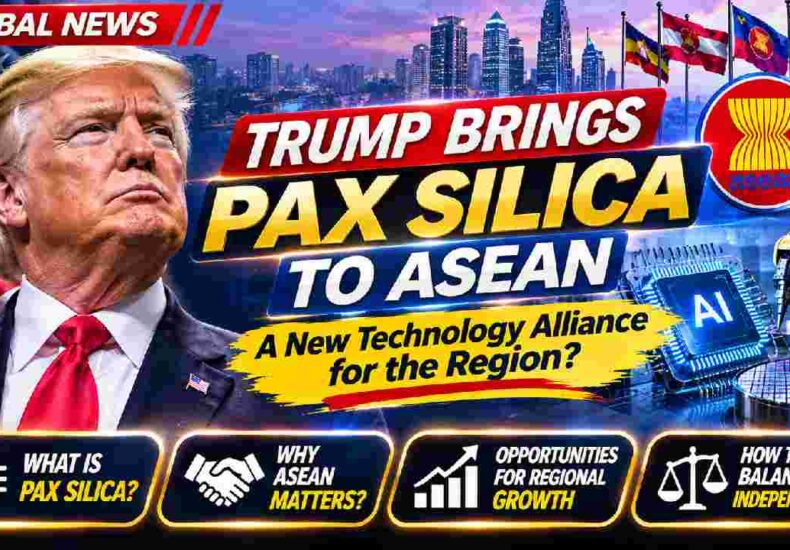
Trump Brings Pax Silica to ASEAN, Reshaping Global Technology Alliances
Fundacion Rapala – The Trump Pax Silica Initiative has emerged as a major topic in discussions surrounding the 2026 ASEAN Summit in Manila, Philippines. US President Donald Trump is expected to encourage Southeast Asian countries to deepen cooperation with Washington on artificial intelligence, semiconductor manufacturing, and critical mineral supply chains. However, the initiative represents more than another diplomatic proposal. It reflects a growing belief that technological independence will shape economic prosperity and national security for decades. According to a November 13 report by the South China Morning Post, Washington intends to promote greater regional participation in Pax Silica, including cooperation through the AI Spark program. For Southeast Asian governments, the proposal arrives at a sensitive moment. Countries seeking foreign investment must also protect their economic independence. Consequently, discussions surrounding Pax Silica could influence how the region approaches technological development and international partnerships.
Understanding Pax Silica and Its Strategic Purpose
Pax Silica is a United States-led economic security initiative designed to strengthen cooperation across the global technology supply chain. The US State Department introduced the initiative in December 2025, emphasizing partnerships involving critical minerals, energy resources, advanced manufacturing, semiconductors, and artificial intelligence infrastructure. Its name combines two meaningful concepts. The Latin word “pax” represents peace and stability, while “silica” refers to a material associated with silicon production, an essential foundation of modern semiconductor technology. Together, these ideas symbolize Washington’s ambition to establish a stable technological ecosystem among trusted international partners. Unlike conventional trade agreements, Pax Silica emphasizes strategic coordination and long-term economic resilience. Its supporters believe stronger partnerships can reduce supply disruptions and encourage innovation. Nevertheless, the initiative also raises important questions about international competition, technological sovereignty, and the growing political significance of advanced digital infrastructure.
Read More : Stolen Olympic Gold Medal Recovered as Indian Hockey Legend Celebrates Emotional Reunion
Why Southeast Asia Matters in the Global AI Race
Southeast Asia occupies an increasingly important position in the international technology economy. The region connects major manufacturing centers, international shipping routes, expanding digital markets, and countries with valuable natural resources. Singapore already plays an influential role in semiconductor services and advanced technology investment. Meanwhile, other ASEAN economies are working to attract electronics manufacturing, digital infrastructure, and higher-value industrial activities. These characteristics make Southeast Asia an attractive partner for the Trump Pax Silica Initiative. Washington recognizes that developing artificial intelligence requires much more than powerful software. Modern AI systems depend on semiconductor components, reliable electricity, specialized manufacturing equipment, and efficient transportation networks. Therefore, partnerships with ASEAN countries could help diversify production and strengthen supply chain resilience. However, the region’s governments must consider whether deeper cooperation will generate lasting local benefits rather than simply serving the strategic interests of larger economies.
The Growing Competition Between Washington and Beijing
Behind Pax Silica lies a broader competition between the United States and China for influence over advanced technologies. Both countries understand that artificial intelligence, semiconductor production, and critical mineral processing could determine future economic and military capabilities. Washington has increasingly emphasized reducing dependence on vulnerable supply chains, particularly those involving strategically important materials and manufacturing processes. China, meanwhile, remains deeply integrated into global industrial networks and maintains significant influence across several technology-related supply chains. This creates a difficult balancing act for Southeast Asian countries, many of which maintain substantial economic relationships with both powers. Supporters of Pax Silica view the initiative as an opportunity to strengthen supply security and diversify international partnerships. Critics, however, question whether competing technological blocs could increase geopolitical divisions. For ASEAN, the central challenge involves protecting regional autonomy while continuing to benefit from international investment, trade, and innovation.
Read More : Rising Cyberattack Threats Push Crypto Industry to Strengthen Digital Security
The Philippines Faces Opportunities and Difficult Questions
The Philippines has become an important focus of discussions surrounding Pax Silica, particularly because of proposals involving New Clark City in Tarlac. Philippine officials have explored cooperation with Washington on advanced manufacturing, critical mineral processing, and technology-related investment. Such projects could potentially create employment opportunities and encourage industrial development. Nevertheless, the proposal has also generated public concern. Environmental advocates and community groups have questioned its possible effects on local communities, land use, and long-term national interests. Philippine authorities have clarified that the proposed initiative does not include the previously discussed artificial intelligence data center. Meanwhile, American Ambassador Lee Lipton stated that no major announcement concerning the proposed economic security zone had been scheduled for the ASEAN Summit. Philippine officials have continued discussing a possible agreement, although its final terms remain uncertain. These developments highlight the importance of transparency and meaningful public consultation.
Could Pax Silica Transform ASEAN’s Economic Future?
The potential economic impact of Pax Silica extends beyond semiconductor factories and international investment announcements. If participating countries secure meaningful technology transfers, workforce development, and industrial partnerships, the initiative could support a broader transformation of regional economies. Local engineers might gain access to specialized training, while domestic manufacturers could potentially enter more advanced global production networks. Furthermore, improved infrastructure and diversified supply chains could attract businesses seeking reliable technology partners. However, these outcomes are possibilities rather than guaranteed benefits. Successful implementation would require clear agreements, responsible financing, effective regulations, and sustained cooperation between governments and private companies. ASEAN countries would also need to assess environmental costs and ensure that local communities share in economic opportunities. Ultimately, the initiative’s value should be measured through tangible improvements in industrial capabilities, employment quality, and long-term economic resilience rather than diplomatic announcements alone.
ASEAN’s Next Challenge Is Balancing Innovation and Independence
As international attention turns toward the Trump Pax Silica Initiative, Southeast Asian leaders face decisions that could influence their countries for generations. Technological development offers extraordinary opportunities, but it also introduces new dependencies and political responsibilities. Governments must determine how to welcome international investment without surrendering control over strategic industries, natural resources, or important infrastructure. The debate is particularly relevant as Washington promotes closer technological cooperation while China remains a major economic partner across the region. For ordinary citizens, the most meaningful outcomes will involve accessible employment, stronger domestic industries, and improved public services. Diplomatic agreements alone cannot deliver those benefits without thoughtful implementation. As of November 16, 2026, uncertainty remains over the timing of a proposed Philippine agreement, despite continued discussions. The coming negotiations will therefore test whether Pax Silica can develop into a partnership that supports innovation while respecting the sovereignty and development priorities of ASEAN nations.