The Underground Tunnel Village That Helped Vietnamese Families Survive the Vietnam War
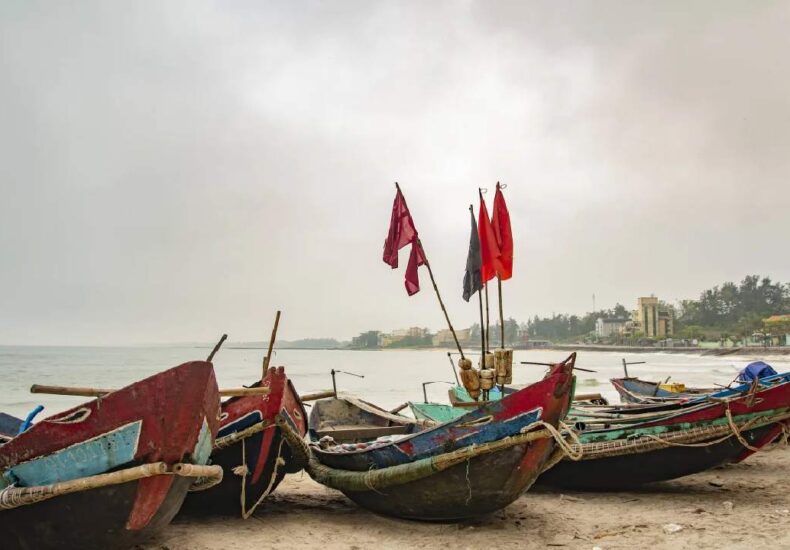
Fundacion Rapala – Before becoming one of Vietnam’s most remarkable historical landmarks, Vịnh Mốc was a quiet fishing village surrounded by rice fields, bamboo groves, and sandy beaches along the coast of Quảng Trị Province. Life moved at a gentle pace, and generations of families relied on farming and fishing to support their livelihoods. However, everything changed after Vietnam was divided following the Geneva Accords of 1954. Because Vịnh Mốc was located near the Demilitarized Zone (DMZ), it soon found itself at the center of one of the most intense conflict zones of the Vietnam War. As military operations escalated, the village endured relentless air raids and artillery attacks. Faced with constant danger, local residents realized that fleeing was not a practical solution. Instead, they made an extraordinary decision that would forever become part of Vietnam’s history: they would build an entire community beneath the earth.
Choosing the Underground as a Path to Survival
As bombing intensified throughout the region, the people of Vịnh Mốc searched for a way to protect their families while remaining close to their homes and farmland. Leaving the area entirely would have meant abandoning their livelihoods and exposing themselves to new dangers elsewhere. Therefore, village leaders and residents embraced an ambitious plan to create an underground refuge. The surrounding red basalt soil offered a unique advantage because it was sturdy enough to support tunnels while remaining soft enough to excavate with basic tools. Working together, villagers dug tirelessly day and night, often under the threat of incoming attacks. What began as a survival strategy quickly evolved into a massive engineering project. Through determination and cooperation, they transformed the ground beneath their village into a safe haven that could shield hundreds of people from the devastation unfolding above.
Read More : Oliver Tree Among Six Killed In Tragic Rio Helicopter Crash
Building More Than Just a Shelter
Unlike many wartime bunkers designed for short-term protection, the Vịnh Mốc tunnel system was created to support daily life over an extended period. Residents understood that they needed more than hiding places; they needed a functioning community. As a result, the underground complex included living quarters for families, meeting rooms, storage areas, medical facilities, and communal spaces. The main tunnels were large enough for people to walk through comfortably, creating a network that connected different sections of the underground village. Furthermore, carefully designed ventilation shafts allowed fresh air to circulate throughout the system. This remarkable planning enabled residents to maintain a sense of normalcy despite living beneath a war zone. The tunnels became more than a shelter from bombs. They became a symbol of resilience, proving that human ingenuity can flourish even during the darkest periods of history.
Daily Life Beneath the Surface
Life underground required significant adjustment, yet the people of Vịnh Mốc managed to create routines that preserved their sense of community and hope. Families cooked meals, cared for children, and supported one another while living within the tunnel network. Children continued to learn and play despite the difficult circumstances surrounding them. Moreover, social gatherings and community meetings helped maintain morale during years of uncertainty. Although the conditions were far from comfortable, residents adapted remarkably well to their underground environment. Many villagers spent up to six years living beneath the surface, emerging only when necessary. Their ability to maintain daily life under such extraordinary circumstances demonstrated exceptional courage and determination. Every aspect of their existence reflected a shared commitment to survival, family, and the belief that peace would eventually return to their homeland.
Read More : Olivia Rodrigo Enters a New Era With Her Third Studio
Children Were Born Underground During Wartime
One of the most inspiring aspects of the Vịnh Mốc story is that life continued even as war raged above. During the years spent underground, several children were born within the tunnel system. These births became powerful symbols of hope and resilience for the community. While bombs fell overhead, families welcomed new life into the world and looked toward a brighter future. Mothers, healthcare workers, and neighbors worked together to ensure the safety of both infants and parents under challenging conditions. These moments reminded residents that despite the destruction around them, the human spirit remained unbroken. Today, stories of children born inside the tunnels continue to resonate with visitors from around the world. They serve as a moving reminder that even in times of conflict, hope can survive and flourish in the most unexpected places.
The Tunnel Network Connected Land and Sea
The designers of Vịnh Mốc understood that survival depended on maintaining access to resources and communication routes. Consequently, the tunnel complex included multiple entrances leading to nearby farmland and the coastline. These exits allowed villagers to obtain food, transport supplies, and continue supporting military and civilian operations despite constant threats. Additionally, the connection to the sea played a crucial role in ensuring that residents could receive assistance when needed. The strategic layout reflected impressive planning and local knowledge of the terrain. Every section of the tunnel network served a specific purpose, contributing to the community’s ability to function independently during wartime. Even decades later, engineers and historians continue to admire the practical design of the system. Its effectiveness highlights the extraordinary resourcefulness of ordinary people facing extraordinary circumstances.
Vịnh Mốc Remains a Powerful Symbol of Human Resilience
Today, the Vịnh Mốc tunnels stand as one of Vietnam’s most compelling historical sites. Visitors from around the world walk through the underground passages to better understand the sacrifices made by the people who once lived there. The tunnels offer more than a lesson about war; they tell a deeply human story of courage, adaptation, and perseverance. As travelers explore the preserved chambers and narrow corridors, they gain insight into the daily realities faced by hundreds of families during one of the most turbulent periods in Vietnamese history. Furthermore, the site serves as a reminder of the value of peace and the strength of community. The legacy of Vịnh Mốc continues to inspire generations, demonstrating how determination and unity can help people endure even the most challenging moments of their lives.