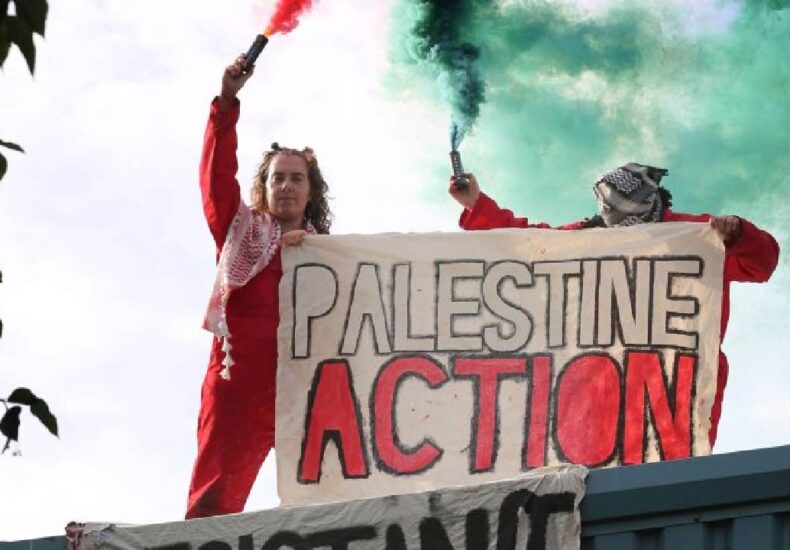
UK High Court Rules Palestine Action Terror Ban Unlawful, Marking Blow to Government
Fundacion Rapala – On February 13, 2026, the UK High Court ruled that the government’s decision to ban Palestine Action as a terrorist organization was unlawful. This ruling marked a significant win for civil liberties advocates. The court found that the government’s move, led by former Home Secretary Yvette Cooper, was disproportionate and overreached. However, the court allowed the ban to remain in place while the government plans an appeal.
A Major Setback for the Government
The ruling is a major setback for the UK government. It follows the banning of Palestine Action after their actions at the RAF Brize Norton airbase in June 2025. The group had vandalized planes as part of their protest against the UK’s involvement in military operations related to the Israeli-Palestinian conflict. The Home Office argued that the group posed a national security threat, but the court disagreed.
The decision has sparked concern about the government’s use of anti-terror laws to suppress political dissent, especially when it comes to nonviolent activism.
Palestine Action’s Mission and Actions
Palestine Action is a UK-based activist group. They focus on disrupting the operations of companies involved in the production of weapons used by the Israeli government. The group gained attention with direct actions against companies like Elbit Systems and UAV Tactical Systems. These actions often include occupations, vandalism, and blockades. The group’s goal is to end global participation in what they call Israel’s “genocidal and apartheid regime.”
The group has become a symbol for pro-Palestinian activists. However, its methods have been controversial, with some viewing them as extreme and others as courageous.
The Controversial RAF Brize Norton Action
The turning point for the government’s decision was the incident at RAF Brize Norton. In June 2025, Palestine Action activists damaged two Airbus Voyager refueling planes. This act led to the group being labeled as a terrorist organization by the Home Office. The government equated them with groups like al-Qaeda and ISIS, drawing sharp criticism from human rights groups.
While the UK government defended the ban, many international organizations condemned the move. Critics argue that labeling a protest group as a terrorist organization could set a dangerous precedent for silencing political dissent.
“Read More : How Trump Failed in His Latest Bid to Weaponize Justice”
The Legal Challenge and Court Ruling
Huda Ammori, co-founder of Palestine Action, brought the legal challenge against the ban. She argued that the proscription violated basic freedoms of expression and protest. The High Court agreed, ruling that the decision was disproportionate. The court noted that the government had not provided enough evidence to justify such a drastic measure.
Despite the ruling, the government plans to appeal. This means the ban will remain in place while the case continues to unfold.
The Impact of the Ruling on Civil Liberties
The ruling highlights concerns about the government’s increasing use of counterterrorism laws. Critics argue that these laws are being applied too broadly to target peaceful activism. The case underscores the need for greater scrutiny over how these laws are used, especially in democratic societies where political dissent should be protected.
The decision also brings attention to the balance between national security and civil liberties. As the debate continues, many are asking whether the UK is using these laws to silence legitimate protest movements.