Samsung Unveils AI OLED Bot, a Wall-E-Like Vision of the Future
Fundacion Rapala – At CES 2026, Samsung Display surprised visitors with a futuristic robot concept called AI OLED Bot, instantly drawing comparisons to Wall-E, the beloved animated character from Pixar’s 2008 film. However, unlike the rusty, industrial charm of Wall-E, Samsung’s robot feels clean, minimal, and intentionally modern. From the very beginning, the AI OLED Bot appears designed to feel approachable rather than intimidating. Its compact body, soft curves, and calm visual presence signal a shift in how robots may coexist with humans in daily spaces. More importantly, Samsung used this robot to tell a larger story about the future of interaction. Instead of emphasizing raw computing power or mechanical strength, the company highlighted emotional design and visual communication. Through this concept, Samsung invites people to imagine robots not as cold machines, but as gentle companions that quietly assist, inform, and adapt to human environments.
OLED as a Face, Not Just a Screen
The most striking feature of the AI OLED Bot is its face: a 13.4-inch OLED display that functions as the robot’s primary interface. Rather than relying on voice commands, Samsung places visual interaction at the center of the experience. This design choice feels deliberate. In busy or noisy environments, visual cues often communicate more clearly than sound. On the OLED screen, the robot can display chatbot-style conversations, schedules, alerts, and contextual information. Because OLED panels offer deep contrast, vivid colors, and flexible shapes, the screen feels alive and expressive. As a result, the robot’s “face” can convey clarity without overwhelming users. Through this approach, Samsung subtly redefines how people may interact with AI in public spaces. The OLED face is not just a display; it becomes a personality layer that bridges technology and human attention.
“Read More : Northern California Flooded by Perfect Storm of Rain and Record-High Tides”
Designed for Campuses and Shared Public Spaces
Samsung positions the AI OLED Bot as a conceptual teaching assistant, especially suited for campus environments. In the scenarios presented at CES 2026, the robot helps students navigate daily academic life. For instance, it can show classroom locations, display lecturer profiles, announce schedule changes, or remind students of assignments. Crucially, all of this happens visually, reducing the need for spoken interaction. In crowded hallways or libraries, this approach feels practical and respectful. Furthermore, the robot’s small, wheeled base allows it to move discreetly without disrupting foot traffic. Its neutral black-and-white color scheme helps it blend into institutional settings. By focusing on education, Samsung demonstrates how AI robots could support people without replacing human roles. Instead of acting as authority figures, these robots function as calm information hubs that enhance clarity and accessibility.
Minimalist Design That Feels Human-Centered
Beyond its screen, the AI OLED Bot’s physical design reinforces its friendly character. The robot features a cylindrical body, subtle arms, and hidden wheels, creating a sense of smooth continuity rather than mechanical complexity. Nothing appears sharp or aggressive. This simplicity matters. When robots enter human spaces, design strongly influences trust and acceptance. Samsung clearly understands this psychological aspect. The rounded proportions make the robot feel less imposing, while the absence of visible hardware keeps attention focused on interaction, not machinery. Additionally, the robot’s height and scale feel intentionally modest. It does not tower over users, nor does it demand attention. Instead, it quietly waits to be engaged. Through these choices, Samsung emphasizes that future robots should adapt to humans, not the other way around.
“Read More : Netanyahu and Trump: A Familiar Appeal in a Relationship Tested by Power and Caution”
Highlighting OLED’s Flexibility Beyond TVs
While the AI OLED Bot is a robot, it also serves as a showcase for Samsung Display’s OLED technology. Through this concept, Samsung demonstrates how OLED panels can move beyond traditional devices like televisions and smartphones. OLED’s flexibility allows it to curve, wrap, and integrate seamlessly into unconventional forms. In the context of robotics, this opens exciting possibilities. Screens no longer need to feel like flat attachments; they can become organic parts of a device’s identity. Samsung reinforced this message by also showcasing other OLED-based concepts, such as AI OLED Cassette and AI OLED Turntable. Although all remain conceptual, they collectively illustrate a future where displays shape experiences rather than simply present content. In this sense, the AI OLED Bot becomes a design manifesto for Samsung’s display division.
From Ballie to AI OLED Bot, A Continuing Vision
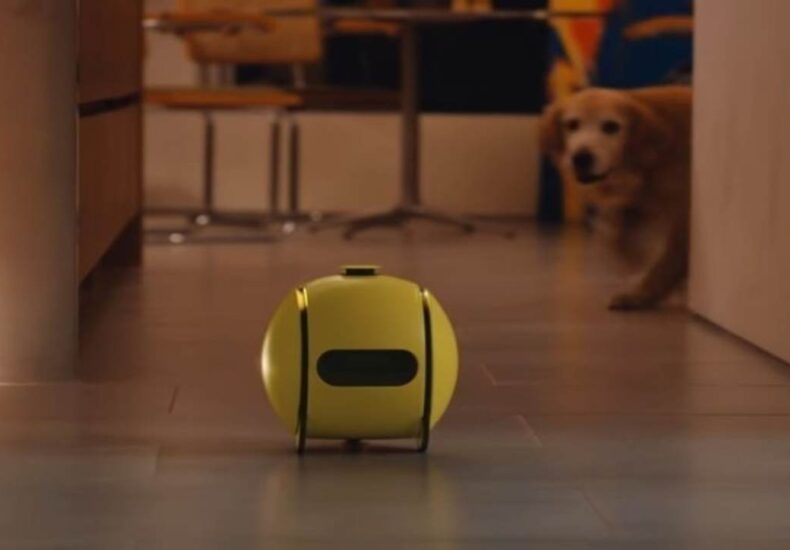
The AI OLED Bot is not Samsung’s first step into robotics. Previously, the company introduced Ballie, a small spherical home robot that gained attention at CES 2020 and evolved further by CES 2024. Ballie emphasized home assistance, gesture recognition, and projection features. In contrast, the AI OLED Bot explores public and educational spaces. Together, these concepts reveal a consistent vision. Samsung imagines robots as companions that assist quietly, move intuitively, and communicate visually. Although none of these robots are commercial products yet, they signal long-term direction. Samsung is not racing to sell robots tomorrow. Instead, it is carefully shaping how people might emotionally accept them in the years ahead.